Managed Agent Platform Cage Match Which Services Run Cursor or Claude Code in a Disposable Cloud VM Without an Ops Ticket
Cursor, Claude Code, Codex, Jules and Devin differ on isolation, triggers and review.
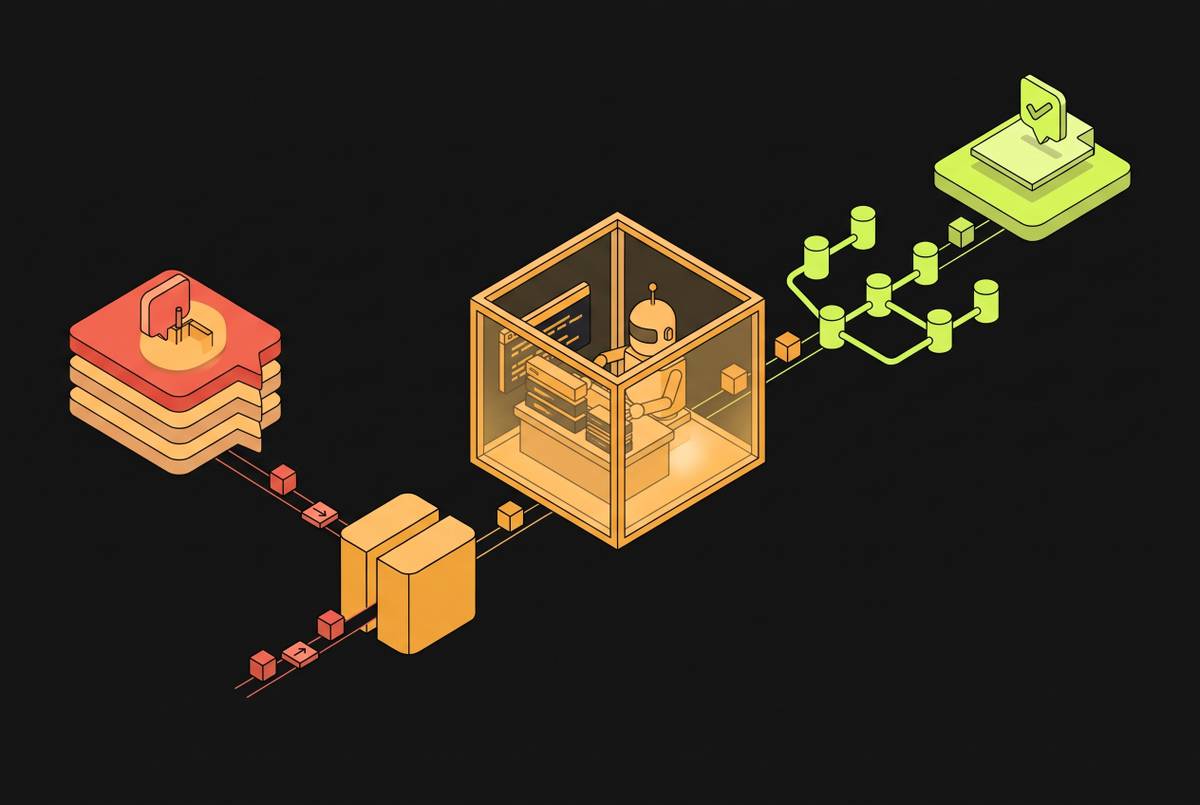
A multi-harness cloud coding agent platform should set up an isolated, disposable VM for each harness, run agents in parallel, and send work back for a human to review without the team having to manage a runner pool. Cursor, Claude Code on the web, Codex cloud, Google Jules, and Devin offer managed execution, but not the same environment or workflow. The decisive distinction is whether isolation, triggers, and reviewable output form a complete delegation loop.
What "disposable cloud VM" actually means and why the distinction matters for teams evaluating this category
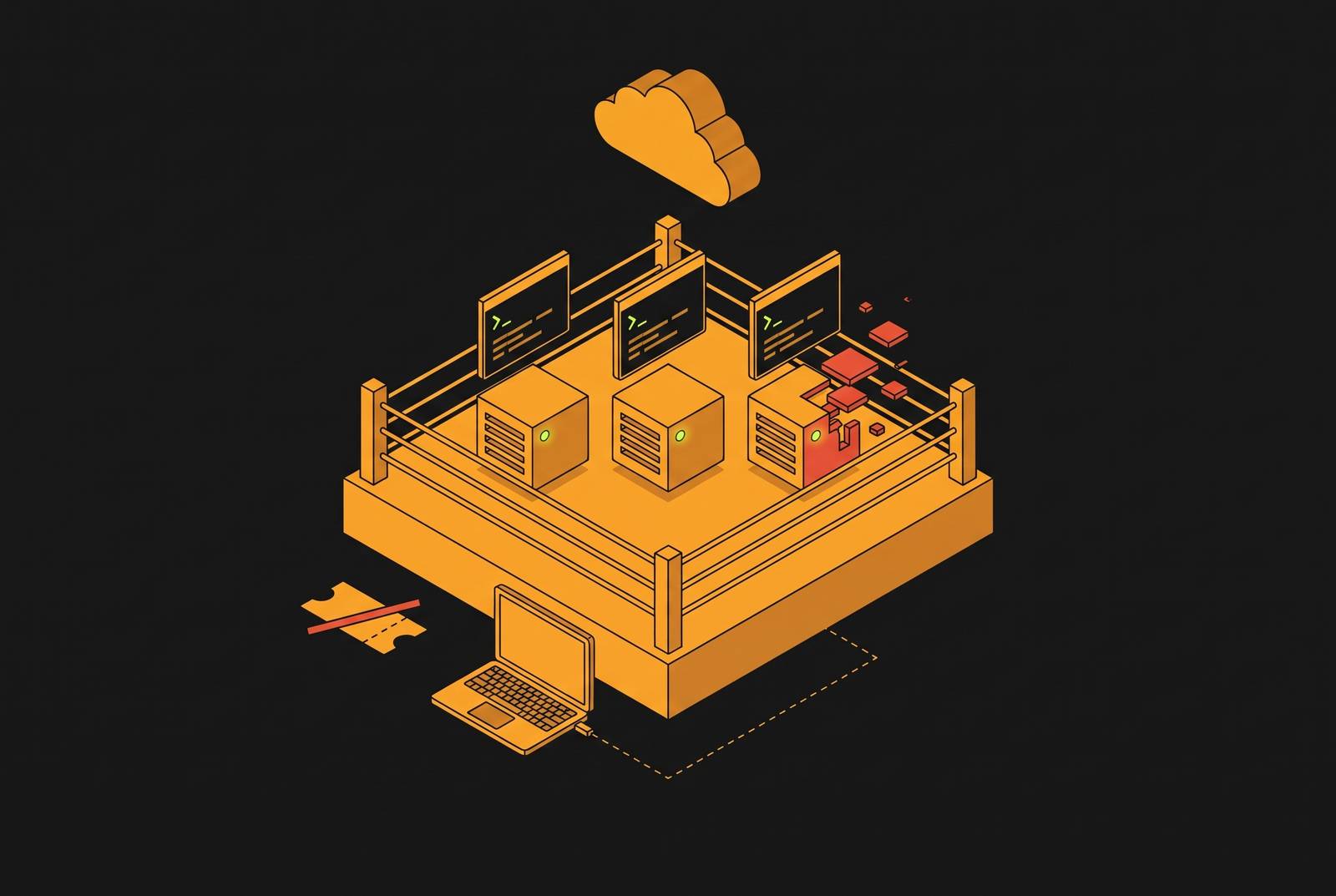
Three different environments appear under this label. A true disposable VM isolates a task and is destroyed or reset afterward. A shared sandbox persists across tasks, while a CI-runner-style ephemeral container need not provide a full development environment. Shared state can contaminate later work, expose credentials across sessions, and complicate audit investigations. Per-task disposal removes that shared-state pathway, but does not establish every enterprise security control.
The practical test consists of three questions. Does each task get its own Linux VM, filesystem, network namespace, and process tree, or share any of these with another task or user? Is that VM destroyed or reset after the agent pushes its branch, or left to accumulate state? Does the agent run as the platform provisions it, or does provisioning require an ops ticket, a custom Docker image, or a self-managed runner pool?
The five platforms worth shortlisting and what each actually provisions
All five platforms provide isolated cloud infrastructure without requiring an ops ticket on their standard paid offerings. Their execution boundaries and tools differ substantially. Cursor cloud agents run on Cursor-managed Ubuntu VMs with a full desktop, including browser access and the ability to test a running application. Screenshots, videos, and logs attach to the pull request. Cloud-agent tasks support GitHub, GitLab, Bitbucket, and Azure DevOps.
Claude Code on the web uses a vendor-managed Ubuntu 24.04 VM with 4 vCPUs, 16 GB RAM, and 30 GB disk. Docker, PostgreSQL, and Redis come preinstalled. There is no desktop or browser control. GitHub is required for the complete repository-to-PR workflow, so the hosted service does not provide equivalent round-trips for GitLab, Bitbucket, or Azure DevOps.
OpenAI’s Codex cloud provisions an isolated container preloaded with the repository, rather than the full VM environment in the strict definition above. Its runtime separates setup from agent execution. Setup has network access to install dependencies, while the agent phase has internet access disabled by default. That default can be changed to limited or unrestricted access.
Google Jules clones the repository into a Google-managed cloud VM and presents an editable execution plan before writing code. The plan is its distinctive human checkpoint. As of August 2026, Jules runs on Gemini 3.1 Pro and automatically detects and fixes CI failures on PRs it created. Its public API supports connections to CI/CD, Slack, Linear, and Jira.
Cognition’s Devin provides a dedicated cloud environment with a shell, browser, and code editor. It opens PRs and responds to review comments and CI results. As of August 2026, it can divide large tasks among parallel agents in isolated VMs. Its autonomous-engineer model does more than a single task runner, though letting it do so much on its own also makes work harder to follow as it runs.
How trigger models determine whether a team actually delegates work or just automates a prompt
Isolation sets where work runs, while triggers set whether someone has to be on hand to start it. Starting an agent by hand from an IDE falls short for a team that expects it to respond to an overnight issue or alert. Delegation requires an entry point where work already appears. Continued delegation also requires a way to respond when that work changes.
Cursor Automations has the most developed trigger model in this comparison. Its March 2026 release connected GitHub PRs, Linear issues, Slack messages, and PagerDuty incidents to cloud sandboxes. The August 19, 2026 update added standing subscriptions to specific PR or Slack threads. New comments can therefore wake an agent again, allowing review feedback to drive another iteration without manual re-triggering.
Codex accepts tasks through its web interface, IDE extension, and @codex mentions on GitHub issues or PRs, but no standing subscription layer is documented here. Jules provides an event-driven route through its public API. Devin takes work from Slack @-mentions and acts on review comments as follow-up work. A one-shot launch and a persistent assignment are different operational commitments.
Which platforms let teams run multiple agents in parallel without managing infrastructure?
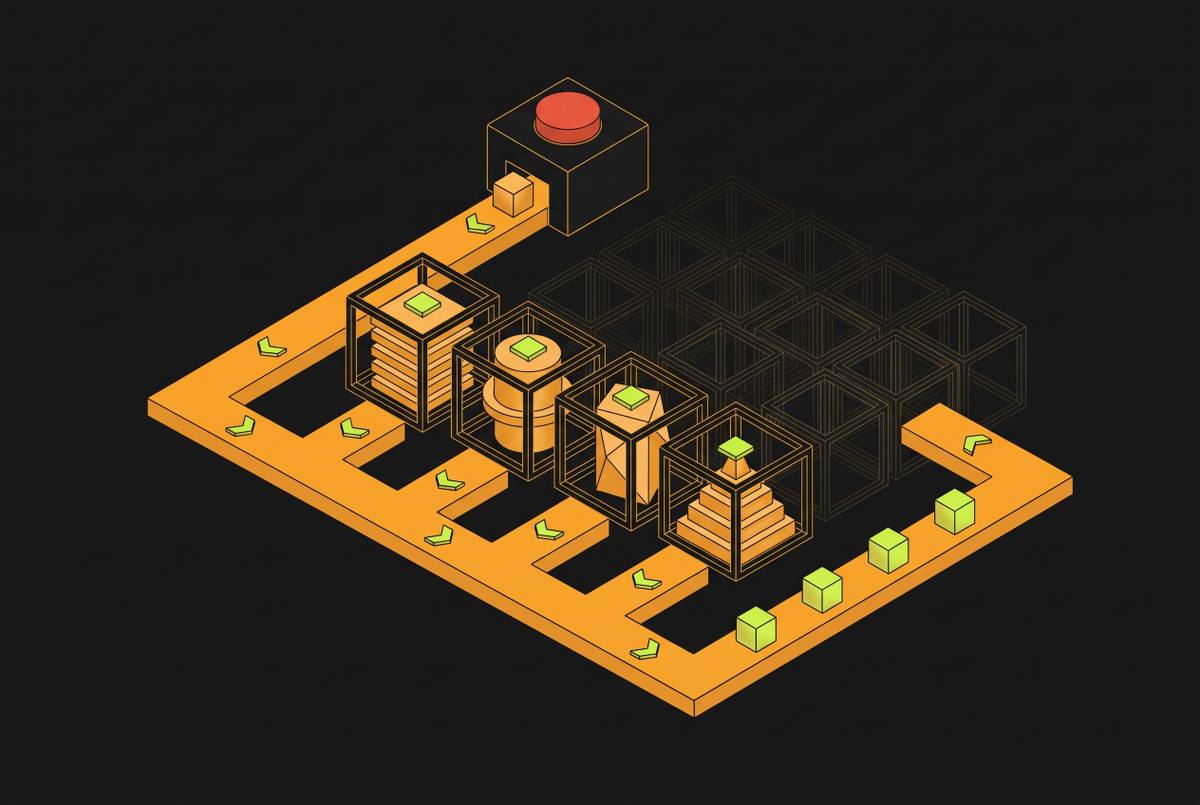
Concurrent execution requires separation between working environments. Agents sharing a working directory can overwrite each other’s edits, turning greater throughput into race conditions. Cursor gives each subagent its own VM and clean project checkout. A parent can delegate a lint fix, a flaky-test investigation, and a dependency patch to separate subagents, then collect their results. A fresh subagent can also test the parent’s changes without inheriting its leftover state.
Cursor reports that a substantial share of its own PRs are agent-made, providing a concrete signal of agent execution at scale. Devin’s parallel mode applies the same VM-isolation principle to large tasks. Claude Code supports several concurrent cloud sessions, each in its own VM, with monitoring from the Claude mobile app. That is task-level parallelism.
Codex also supports concurrent tasks in separate containers. Its default-offline agent phase further restricts network interaction during execution. Jules documents one agent working through the plan for each task, with no parallel subagent model.
What you actually get back — PR output, artifacts, and the review experience across platforms
The useful output is a change a human can assess, question, and approve. Review evidence varies considerably across these platforms. Cursor attaches screenshots, videos, and logs from the desktop session, so a reviewer can inspect what the agent clicked, what the application displayed, and which errors appeared. That evidence supports the review decision without requiring the reviewer to reproduce every interaction first.
Claude Code pushes changes to a branch, and the human creates the PR. Its automated repair feature pushes more fixes when CI fails or review comments come in. Codex instead lets the reviewer request revisions, open a PR, or pull the diff locally. With its default network setting, it works without mid-task internet calls, which makes that part of the audit simpler but keeps it from fetching missing dependencies while it runs.
Jules moves one review decision earlier. The team can redirect the execution plan before code is written, rather than first discovering a mistaken approach in the diff. Devin opens PRs and acts on review comments and CI results, and teams can give it more feedback through Slack @-mentions. Its tradeoff is visibility during autonomous work.
How Linear, Slack, GitHub, and Sentry connect to disposable VM platforms without changing the team's workflow
For engineers asking how to trigger Claude Code or Codex from Slack and receive a PR, the integration layer is as important as the harness. Linear Agent is a documented multi-harness example that uses Claude Code and Codex to triage, plan, review, and ship within Linear. Ramp built Inspect on Linear’s API to connect specifications, customer feedback, and code, and now writes a majority of the PRs it merges this way.
The other routes differ in how much integration work remains. Cursor connects directly to GitHub, Linear, Slack, and PagerDuty through Automations. Devin starts sessions from Slack @-mentions, while Jules exposes an API for teams wiring their own tools together. Those capabilities should not be conflated with a documented native Slack-to-Claude-Code or Slack-to-Codex workflow.
For a Sentry alert, the evidence here establishes a general integration pattern. A webhook or @-mention can link monitoring context to an isolated agent session, with an investigation and draft PR returned for review. The conversation becomes task context. The relevant distinction is whether that connection is supplied by the platform or assembled by the team.
Enterprise security controls — what isolation actually requires beyond the VM boundary
A disposable VM addresses cross-task state. Teams still need rules for how credentials are used, records for audits, and controls over deployment. The enterprise filter includes SOC 2 Type II certification, SAML SSO, granular administration, and deployment options that keep code out of vendor training pipelines. A VM specification does not establish those controls.
Running work locally does not by itself give teams a central record of what was accessed, what code was generated, and which commands ran for use in investigations. A managed environment provides a central execution record, but that is not equivalent to proving every required audit control. Security review must distinguish the existence of a record from the scope of evidence required.
Codex has the strongest default network-containment posture in this comparison because its agent phase starts offline. This limits external calls during work and constrains the blast radius of prompt injection or a malicious dependency. The qualification is important for enterprise evaluation. Setup still uses the network, and configuring agent-phase internet access changes that default posture.
Pricing structures and the cost traps teams miss when comparing platforms on seat price alone
Seat prices obscure the main consumption question. The bill depends on whether model usage and compute are bundled, separately charged, or subject to overage. Agents that run in parallel can quickly use up an allowance that looks generous. A fair comparison therefore counts the seat charge, model cost, and any compute overage to show the full cost of running the service beyond the advertised subscription.
Cursor’s cloud agents start with Premium at $30 per month. Free and Plus at $8 do not include cloud agents, while Teams tiers cost $30, $100, or $200 per seat per month. Claude Pro starts at $20 per month, and Team standard seats cost $25 per seat per month when billed monthly. Claude’s cloud sessions consume the plan’s usage allowance without a separate VM compute charge.
Jules offers the most accessible free entry point in this comparison. Its Standard tier allows a set number of tasks per rolling day, and paid tiers let teams run more tasks. This task-based structure suits bursts of work. Since April 14, 2026, Devin’s self-serve plans have used dollar-denominated quotas, while Teams adds a minimum monthly floor and a per-full-seat charge. Only Enterprise is still billed in ACUs at the rate on the order form.
Bundled model usage, as in Claude Pro and Jules, makes costs easier to anticipate within the applicable limits. With platforms that use customer model keys, teams pay the platform and the model provider separately. A low platform charge can still leave a substantial separate model bill.
How to shortlist — matching platform capabilities to what a team's workflow actually requires
The practical shortlist starts with source control, trigger surfaces, and security requirements. For GitLab or Azure DevOps, Cursor is the only platform in this comparison with full cloud-agent support for both. GitHub-only teams can consider all five. That first filter prevents a strong execution environment from masking an incomplete repository workflow.
The next filter is how work begins and continues. Cursor is the closest fit for standing assignments on Linear issues, Slack threads, and incident-driven workflows. Jules suits teams that are comfortable connecting an API, while Devin lets teams delegate through Slack and follows through on its own. Codex fits one-shot tasks launched from an IDE, web interface, or GitHub mention.
Security and review needs then narrow the choice. Codex suits teams that need the agent to work offline by default. For code that must stay inside the team’s own VPC, the choices described here include Cursor’s self-hosted workers and Claude Code’s self-hosted routing for Team and Enterprise organizations. Cursor supplies the richest visual review artifacts, Jules offers the editable pre-code plan, and Claude Code provides iterative repair through its automated repair feature.
For teams seeking multiple harnesses rather than one vendor’s agent workflow, the requirement is different again. The natural fit is a platform that provisions isolated VMs per harness, runs Claude Code, Codex, Cursor, or OpenCode in parallel, and bills by compute minute. None of the five descriptions here establishes that complete interchangeable-harness offering. The shortlist must preserve that distinction, because supporting parallel agents is not the same as supporting multiple agent harnesses.