Cross-Repo Concurrent Agent Bracket Claude Code Codex Cursor and OpenCode Scored on Multi-Repo Isolation Routing and PR Return
Claude Code, Codex, Cursor, and OpenCode compared on concurrent multi-repo isolation and PR return.
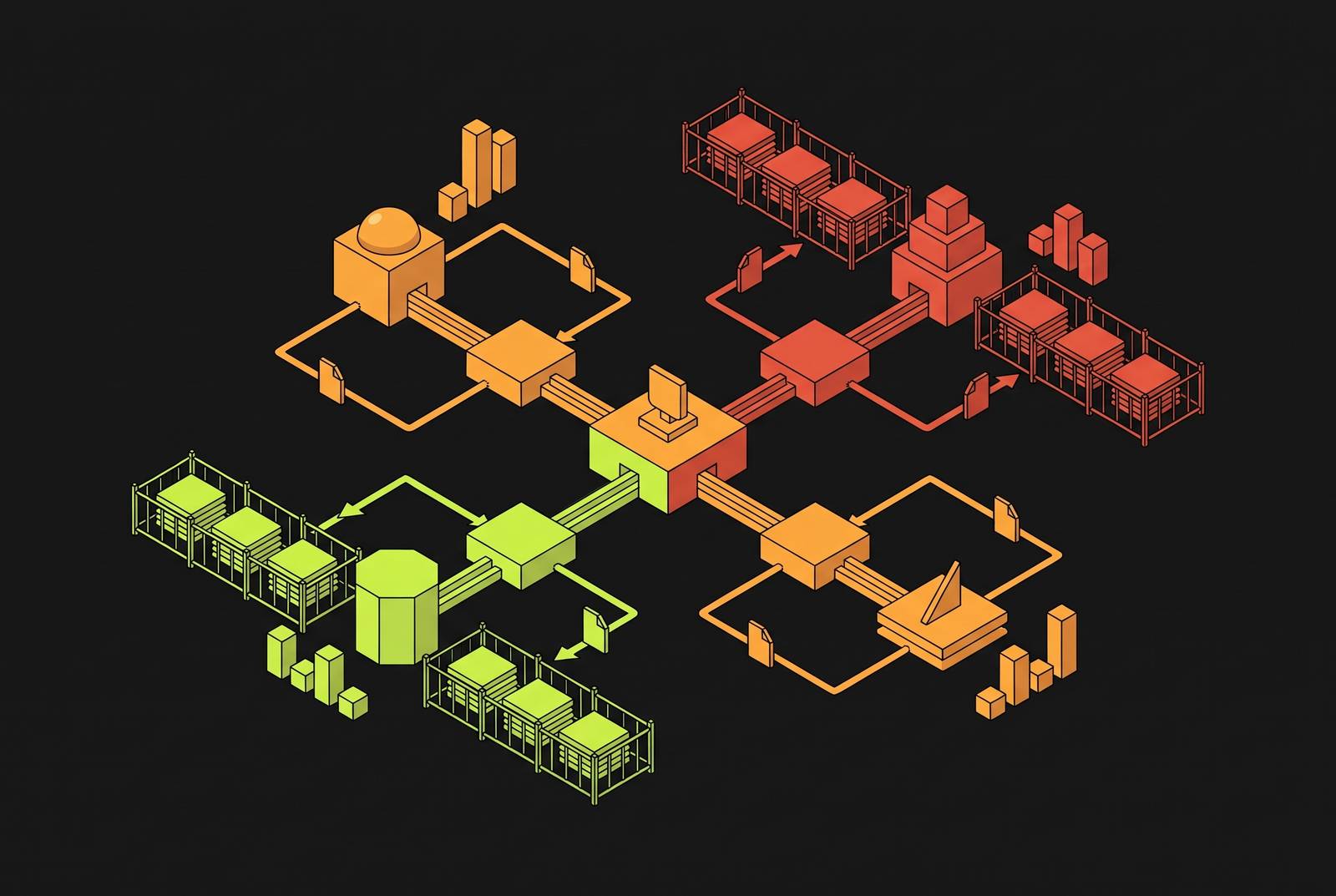
A multi-harness cloud coding agent platform needs to give teams isolated execution, task routing, and automatic pull-request return as well as access to several models. Comparing Claude Code, Codex, Cursor, and OpenCode on those three dimensions helps teams choose how to set them up. For engineers to trigger Claude Code or Codex from Slack and get a PR they can review, the platform layer needs to connect those capabilities.
Why concurrent multi-repo work exposes the limits of single-dimension agent comparisons
A team with three active repositories triggers agents at the same time. Each run needs the right repository, a workspace that another run cannot disturb, and a way to return changes for review. A benchmark score measures a single agent on a single task.
Claude Code, Codex, Cursor, and OpenCode share many capabilities, including subagents, hooks, skills, MCP, and parallel work. Feature inventories therefore reveal less than their execution architectures. The useful comparison is how each harness contains work, assigns scope, and returns evidence that the result works. Even a team running one agent at a time encounters this distinction when queue depth becomes the bottleneck. A second concurrent task makes isolation and routing immediate concerns.
The three scoring dimensions and why each one matters for concurrent work
Session isolation measures whether a failed or partial run can disturb another task. The mechanism determines the boundary. A Git worktree keeps checked-out files and branches separate, while containers and VMs contain more of the run, so support for parallel runs alone is too little to give them the same isolation scores.
Task routing measures whether work reaches the right agent, repository, and environment from its source, including Slack, Linear, or GitHub. PR return quality measures whether the output includes enough evidence, such as test results, logs, screenshots, or recordings, for a human to review without reconstructing the run. These dimensions depend on one another. Poor routing sends an isolated agent into the wrong scope, while contaminated state makes otherwise convincing test results unreliable.
How Claude Code isolates concurrent sessions, routes across repos, and returns pull requests
A team can give concurrent Claude Code sessions separate branches, coordinate their assignments, and monitor background work from one operational surface. That combination makes it the most complete coordination baseline in this bracket. Git worktrees give each agent its own checked-out copy of a repository on a separate branch. An opt-in OS sandbox through Anthropic’s sandbox-runtime adds restrictions, using Bubblewrap on Linux and Seatbelt on macOS.
Agent Teams shipped February 5, 2026 alongside Opus 4.6. Within the same codebase, a lead session decomposes work and synthesizes the results, while peer messages and a shared task list coordinate the other sessions. Persistence addresses a separate operational risk. The Tasks system, introduced in v2.1.16, stores task state on disk so work can be reloaded after a session shuts down or a machine restarts.
Across repositories, the established orchestration pattern is one agent per repo with an orchestrator assigning work through scoped prompts and tools. Agent view shows background sessions together, each in its own worktree, while CLAUDE.md gives them repository instructions. Dynamic workflows let Claude script coordination across dozens or hundreds of subagents for migrations and large refactors. For longer tasks, /goal mode keeps going until a separate model confirms that the stated condition has been met.
Hooks and skills let teams build conventions such as tests, lint checks, and changelog entries into the agent loop to get work ready for review. This gives Claude Code a strong PR-return position for complex multi-file work, although teams must encode their merge criteria. Parallel execution also has an economic constraint. Token cost matters more when multi-agent work keeps running, and teams may need Max tiers. Teams can use only Anthropic models, so the harness has no fallback to another provider.
How Codex isolates concurrent sessions, routes across repos, and returns pull requests
Codex shares the single-provider constraint but takes a different approach to execution. In its cloud workflow, each task has its own container in a shared published environment. Dependencies are installed during setup, and the agent phase executes tests offline by default without touching the local machine or another concurrent task. Codex also provides native cross-platform sandboxing.
AGENTS.md supplies project instructions, while Starlark execpolicy rules in.rules files under.codex/rules/ define execution policy alongside runtime permissions. Code is processed on OpenAI’s infrastructure, which teams with strict data-residency requirements need to allow for even when they most want to keep code off local machines.
Native GitHub integration is Codex’s clearest architectural advantage. It can ingest an issue, write a fix, run tests in its cloud sandbox, and open a PR from a natural-language prompt. The handoffs belong to one pipeline. Its CLI, IDE extension, cloud environment, and web app also let work continue across surfaces without losing state, while plugins and goal mode added in 2026 extend structured delegation.
That issue-to-PR path makes Codex the strongest choice in this bracket for automated GitHub return. Its open-source CLI also lets teams inspect and script the tool loop for custom conventions. Teams already paying for those ChatGPT plans get the agent bundled in, so they have no need for a separate agent subscription. The remaining constraints are OpenAI model lock-in and heavier execution infrastructure than worktrees, with cost and spin-up latency accumulating across high volumes of small tasks.
How Cursor isolates concurrent sessions, routes across repos, and returns pull requests
Cursor shifts the comparison from terminal and cloud workflows to an editor-first operating surface. Each cloud agent receives a VM, giving it stronger containment than a worktree alone. Cursor’s May 13, 2026 release added multi-repo support together with environment version history and rollback, scoped egress, and secrets management. Environment setup is part of that design. Dockerfile configuration and faster layer caching reduce the work required to prepare a new repository’s environment.
The Agents Window provides a dedicated interface for background sessions beside the editor. Engineers can thus route and monitor work close to where they inspect code. Cursor can also read Claude Code’s skills and hooks directly, so teams using both harnesses have less to configure.
That convenience is strongest inside Cursor, and teams initiating work from Linear or GitHub webhooks face more friction than Codex offers through its native GitHub pipeline. The review workflow has a corresponding strength. When cloud-agent work is done, it returns a merge-ready PR with videos, screenshots, and logs, and engineers can use visual diffs to inspect it inside the editor. For fully unattended PR return, however, the CLI-native harnesses have less friction than a workflow whose visibility is strongest with a human in the editor loop.
How OpenCode isolates concurrent sessions, routes across repos, and returns pull requests
OpenCode puts infrastructure ownership outside the harness. Its permission system is a user-experience control, so teams supply containment through an external sandbox such as Docker or a VM. Session management separates work at the tool-loop level, and worktree tools added in 2026 extend separation to branches. Neither substitutes for external containment where security requirements demand it.
Within that boundary, OpenCode uses AGENTS.md for project instructions and LSP integration for live diagnostic feedback. Diagnostics help expose bad state before it reaches a PR, but they do not restrict processes or network access. Its isolation score depends on the backend that contains the work. Teams choosing OpenCode gain control over that backend rather than receiving an opinionated cloud environment with the harness.
Model routing is its strongest differentiator. OpenCode owns no model and connects to providers or local servers, allowing the model connection to change while the harness stays in place. This separates the team’s workflow from one vendor’s release cadence. Its real tool loop handles file reads, command execution, and iteration. However, model flexibility does not imply native work-source integration, and Slack, Linear, and GitHub webhook triggers require team-built connections or a platform layer.
PR quality consequently depends heavily on the selected model and the conventions configured around it. OpenCode supplies the tool loop and diagnostic feedback, while the model supplies the reasoning about what belongs in the change. The open-source license lets teams set their own return conventions without waiting for a vendor to put them on its roadmap. Direct provider rates, with no API-model markup, also affect concurrent-run economics. In exchange for that freedom, a fully managed PR pipeline requires more assembly than Codex’s GitHub integration or Cursor’s artifact delivery.
The bracket summary: which harness wins on each dimension and what that means for team configuration
For teams prioritizing ready-made containment, Codex and Cursor are the strongest matches through containers and cloud VMs respectively. Claude Code fits teams comfortable operating worktrees with an opt-in OS sandbox. OpenCode fits teams that want to own the containment backend. The relevant distinction is how much isolation infrastructure the team expects the harness to supply.
Routing produces a different mapping. Claude Code provides the broadest coordination story through scoped orchestration, persistent tasks, and its background-session view, while Codex offers the most direct fit for GitHub-centered work. Cursor puts routing visibility near the engineer’s editor. OpenCode gives teams the most freedom in model routing, but they need to build more connections for external triggers. Teams prioritizing freedom from a single model provider should weight that advantage heavily despite the infrastructure work.
PR return separates automation from review evidence. Codex has the strongest end-to-end GitHub pipeline, Cursor returns the richest visual artifacts, and Claude Code’s context depth and hooks help it make thorough changes to complex code. OpenCode’s output depends more directly on which model the team chooses and how it sets up the harness. These strengths can coexist within one team. All four support MCP, and Codex and Claude Code install as extensions inside Cursor, so parallel use does not require abandoning an existing harness.
How can teams run multiple coding agents in parallel without managing infrastructure?
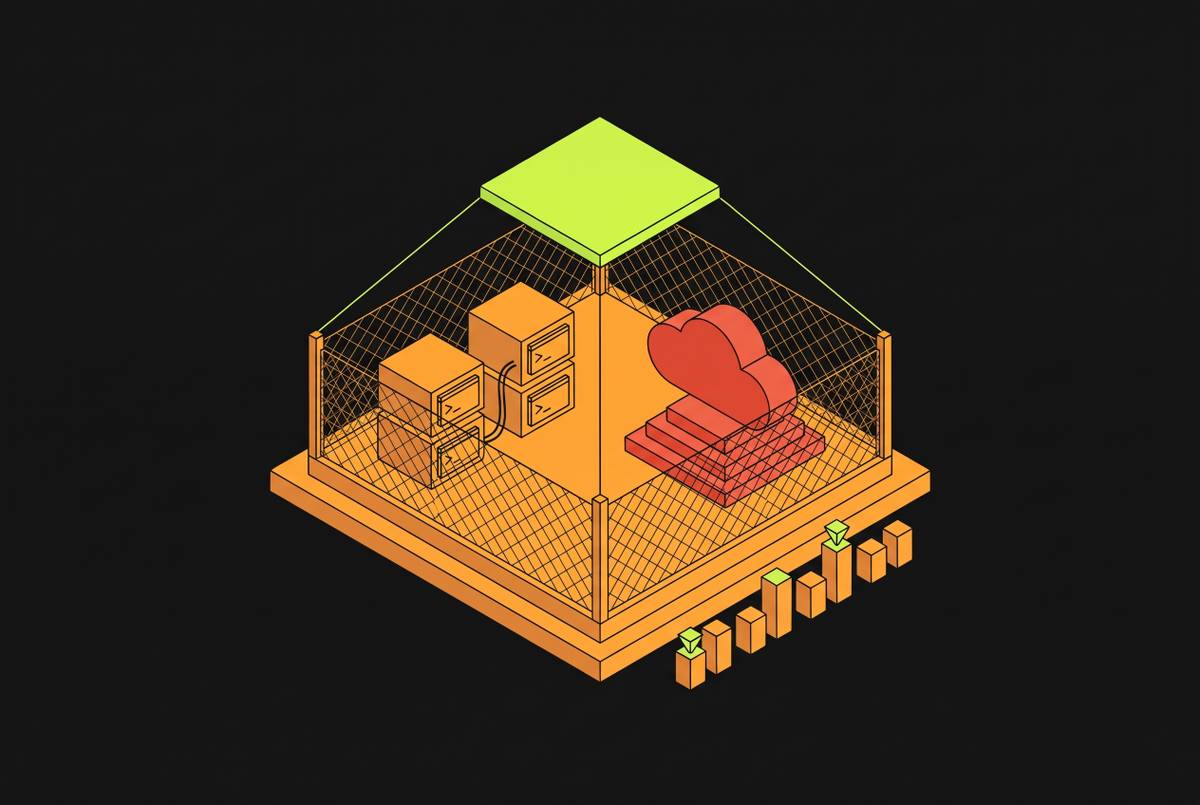
The infrastructure layer must turn separate harness capabilities into reliable concurrent execution. Each run needs an isolated, fully configured environment where it can install packages, run services, drive a browser, and verify output without disturbing another session. A shared machine is not enough. Worktrees provide branch separation for Claude Code and OpenCode, but they do not contain network calls or process state as containers and VMs do. When agents test against live services or install arbitrary dependencies, they need container-or-VM-level isolation for merge-gating results that teams can trust.
A multi-harness platform must also connect work sources to execution and review. For a Slack-triggered Claude Code or Codex task, that means routing to the intended repository and environment, then returning a PR with the evidence needed to assess it. The harness alone is not the entire workflow. OpenCode makes the integration requirement explicit, while the other harnesses provide different portions of that path natively.
Run attribution is another infrastructure requirement. Each execution should be attributable to its trigger source, harness, model, and credentials so teams can diagnose bad PRs and compare which configurations ship code. Without that record, concurrency increases throughput while obscuring causes. The practical rollout is to start with one harness, one repository, and one trigger source, then instrument attribution before expanding. A second repository and concurrent agent belong after the first run is fully observable.