Giving Coding Agents Institutional Codebase Knowledge
Structuring persistent project knowledge helps agents navigate complex codebases reliably.
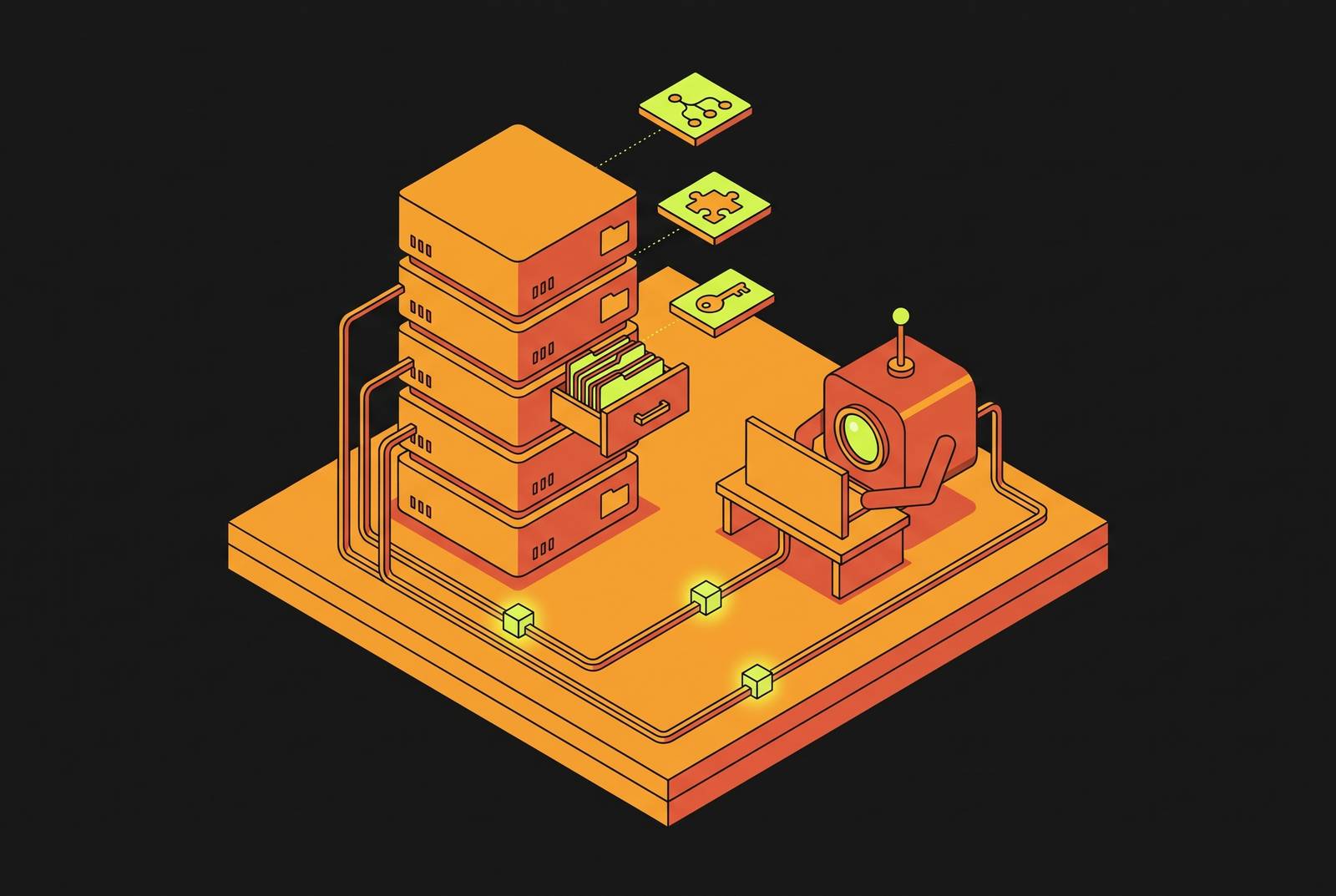
Giving coding agents institutional codebase knowledge is the central task when migrating engineering teams from local to cloud coding agents. Moving Claude Code or Codex off developer laptops takes more than remote execution. Teams need persistent, structured project knowledge and isolated, pre-configured environments where agents can use that knowledge and verify their work.
Why coding agents fail in complex codebases despite writing competent code
An agent writes code that looks correct but breaks something three layers away. Another suggests a refactor the team gave up on six months ago. In either case, the agent may still know how to make the requested change. The missing input is the surrounding knowledge that tells an engineer whether that change belongs in this system. Even when a patch passes compilation, it may break an architectural decision the team has settled on.
Each session begins without that accumulated understanding. Prior decisions may sit in PR descriptions, Slack threads, READMEs, or engineers’ heads, without a reliable path into the agent’s working context. Aristidis Vasilopoulos (2026) states the requirement directly. “the AI must be told — repeatedly, reliably, and in a format it can act on — how the project works, what patterns to follow, and what mistakes to avoid”. Better code-generation benchmarks do not solve this delivery problem. The agent needs access to project-specific knowledge in a form it can use repeatedly, rather than another opportunity to rediscover the same constraints.
What "institutional knowledge" actually means for a codebase, and why it doesn't transfer automatically
Institutional knowledge has at least three distinct forms. Structural knowledge describes module dependencies, call graphs, API contracts, and type hierarchies. Decisional knowledge explains why a constraint is there, why an API contract was locked in, or why the team gave up an approach that seemed cleaner. Operational knowledge covers naming patterns, testing standards, deployment constraints, and other conventions for how the team works. These categories overlap, but they answer different questions about a change.
A call graph can show a dependency without explaining why the team must keep it. A testing convention can say which checks to run without explaining the business rule those checks protect. Human engineers accumulate these connections over time. Agents do not inherit them at session start. Vasilopoulos describes structured knowledge transfer as “a largely open interaction design problem”. A prototype may fit in one prompt, but a production system’s structure, intent, and operating rules require more than a longer description.
Why stuffing the whole codebase into the context window is not a solution
Loading the entire repository on every call increases cost and latency while diluting the task’s relevant evidence. Most code is irrelevant to any particular change. More input therefore does not necessarily produce better understanding, especially when the agent must distinguish a binding constraint from an incidental implementation detail.
Similar text chunks do not reveal all the callers, contracts, and downstream dependencies needed to assess a patch’s safety. When the relevant context remains inaccessible, agents can invent API signatures, library functions, or type assumptions despite receiving substantial input. The useful alternative is persistent, structured memory that retrieves what the task requires.
The manifest file layer: what AGENTS.md, CLAUDE.md, and similar files actually do
Manifest files provide a concrete starting point for making team knowledge available at session start. AGENTS.md, CLAUDE.md, and similar files encode architecture, conventions, naming standards, testing rules, and orchestration protocols. Their strongest role is operational. They give the agent explicit rules that would otherwise depend on a developer remembering to repeat them in every prompt.
Vasilopoulos reports that a large majority of Claude Code projects in the cited evidence specify application architecture in their manifests, with the pattern extending across thousands of files spanning Claude Code, Codex, and GitHub Copilot. The MSR 2026 study associates AGENTS.md files with a 29% reduction in median agent runtime. That finding supports the value of even a simple context layer, without establishing that a manifest solves every reliability problem. Use across the wider open-source ecosystem is still at an early stage. As systems grow, a single file also becomes a poor container for detailed domain knowledge that only some tasks require.
Tiered context architecture: separating hot memory from on-demand specifications
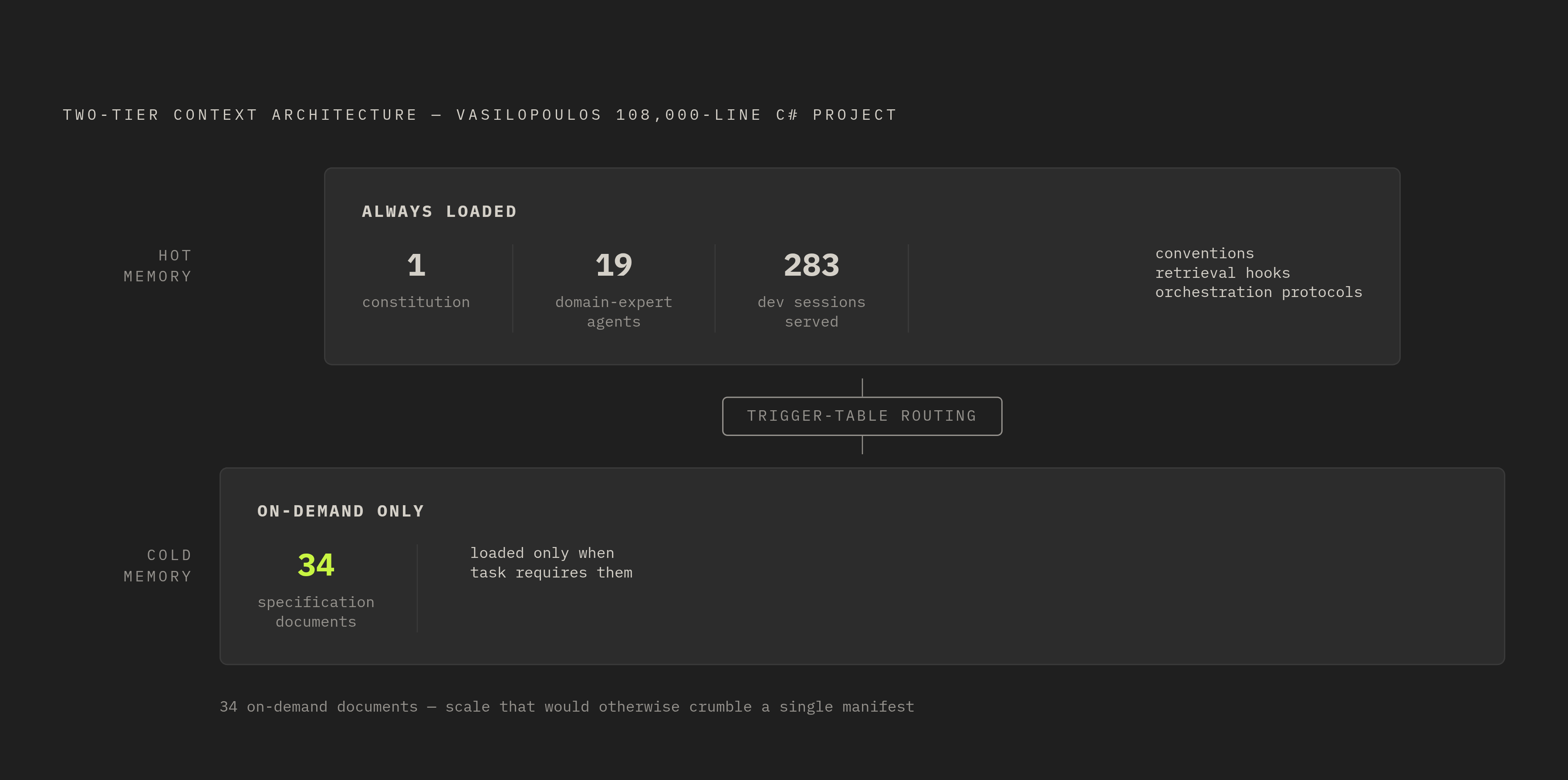
A tiered architecture preserves the manifest’s useful role while separating universal instructions from specialist knowledge. Hot memory contains what every agent needs for every task, including conventions, retrieval hooks, and orchestration protocols. Cold memory holds specifications retrieved when the task calls for them. Access to a critical domain constraint can remain on demand if the architecture reliably routes relevant work to it.
Vasilopoulos developed this pattern during construction of a 108,000-line C# distributed system. The architecture had a hot-memory constitution, 19 specialized domain-expert agents, and 34 on-demand specification documents. It began as a single manifest and grew to more than an order of magnitude beyond typical manifests. Across 283 development sessions, the reported cases showed context propagating between sessions to prevent failures and maintain consistency. This is evidence from a particular project, rather than a universal prescription for how many specialists or documents a team needs.
Trigger tables in the constitution encode which tasks call for which specialists, so the orchestrating agent need not infer that mapping unaided. For teams adopting this pattern, the lesson is to design and version context infrastructure like application architecture. Splitting a large file is not enough unless the agent can reliably find the resulting knowledge.
Making code itself a knowledge carrier: executable context and freshness
Some knowledge needs a stronger source binding than a markdown specification can provide. Business rules, security checks, API behavior, and compatibility contracts need both an explanation and evidence that the explanation remains valid. A retrieved snippet identifies somewhere to look. It does not necessarily identify the evidence that validates a rule, while a generated summary creates another artifact that must be traced and maintained.
Xueping Gao (2026) proposes Executable Code Knowledge (ECK) for selected implementation units. The representation combines domain semantics and executable behavior with contracts, evidence, relations, provenance, validation state, and query operations. Its scope is deliberately selective. High-value units such as data transformations, parser invariants, and workflow transitions justify this treatment more readily than every function in a repository. The practical benefit is a connection between what a rule means, where it is implemented, and what supports its validity.
Freshness becomes an explicit property of that connection. ECK uses fingerprints bounded by code structure to detect when annotated knowledge has gone stale after a patch, rather than leaving an agent to trust a static rule snapshot. Gao evaluated the approach across real Python repositories and controlled patch tasks, reporting executable test coverage and exact changed-line impact matching independently authored labels. Extractive retrieval supplies coverage, ECK governs source and evidence for selected units, and projections deliver that knowledge to the agent.
Graph-based codebase representation and why code's relational structure demands it
Modules, files, functions, classes, and variables form a graph connected by typed relationships. A function may have a downstream impact far from where it is defined. An agent that reasons from nearby text alone cannot see enough of the system’s shape to judge that impact reliably.
Graph-structured context lets an agent start at a relevant code unit and navigate its dependencies without loading the whole repository. Flat searches remain useful for finding text. At large scale, however, broad vector or grep-based searches can force agents to compact results before they have reasoned through them, losing information in the process.
A call edge identifies a relationship, but does not by itself establish that the relationship is a domain invariant. ECK provides semantics and validation for the selected units, while the graph shows the structure of their dependencies. With source-control integration, that structure can stay up to date whenever developers or agents change code. Without that connection, the graph becomes another snapshot whose usefulness declines as the repository moves on.
The entropy problem: context infrastructure that doesn't maintain itself decays
A context system can become hard to trust without losing a single file. Specifications drift, instructions contradict one another, and old rules remain available after their implementations change. Persistence alone does not preserve correctness over time. Keeping that knowledge can make it easier for agents to find and use old rules session after session.
Coinbase’s “context brain” illustrates a maintenance discipline built around this risk. Its approach to an imperfect agent pull request is to update continually maintained markdown files containing team knowledge and lessons, then regenerate the pull request. The correction becomes part of future context. This addresses a different failure from an isolated implementation mistake, because the team changes the knowledge that shaped the output.
Freshness signals address part of the same problem mechanically. ECK’s fingerprints bounded by code structure detect stale annotated units after patches, but that does not replace maintaining architectural explanations and operating rules. When engineering teams make major architectural changes, they should update the context artifacts those changes affect. Including those updates in the definition of done makes context maintenance part of changing the system, rather than a separate documentation task that can be deferred indefinitely.
How do teams move local coding agents to a cloud-based setup?
An agent may understand the testing rules but be unable to follow them if its environment lacks the services it needs or cannot install packages. Running in the cloud alone does not fix that mismatch. Teams moving from local assistants should plan isolated, pre-configured environments in parallel with the context layer, with the ability to run tests, drive a browser, and verify output.
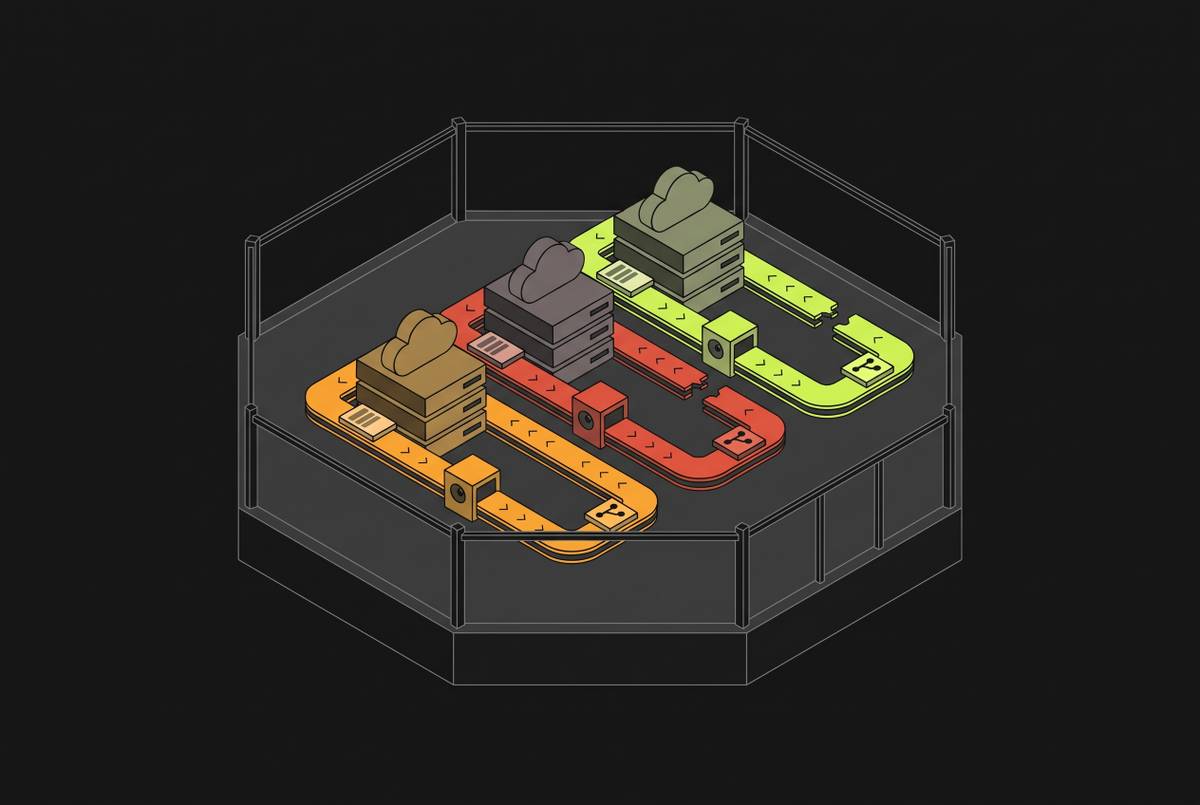
The shared pattern among teams building internal agents at scale is isolated cloud sandboxes with full permissions inside strict boundaries. Curated toolsets and integrations with Slack, Linear, and GitHub connect execution to existing developer workflows. Ramp’s Inspect illustrates how complete this environment can be. Each session includes Postgres, Redis, Temporal, RabbitMQ, and every service an engineer would have locally. The coding agent runs with a VS Code server, a web terminal, and a VNC stack with Chromium for visual verification.
For a migration, these capabilities provide more useful criteria than remote access alone. With a complete set of services, the agent can exercise the system, while verification tools let it test its interpretation of the context. Security requires a separate boundary. External content in issues or alerts can attempt prompt injection, so that content must be treated as data rather than instructions, and sandboxes must have no production credentials.
Building context infrastructure in practice: a staged approach for engineering teams
Teams should begin with a manifest before a complete knowledge platform is available. AGENTS.md, or CLAUDE.md for Claude Code teams, can establish architecture, conventions, and operational rules immediately. The first stage makes repeated instructions durable. Version control, ownership, and maintenance tied to significant changes belong here from the start, before the files have drifted.
As domain knowledge outgrows that foundation, the next stage separates always-loaded conventions from on-demand specifications. Specialized agents are useful for domain areas with high decision density, with routing encoded so the relevant knowledge can actually be reached. Complexity should justify each additional layer. For systems with difficult dependency graphs or high-stakes business logic, graph-based representation and ECK-style annotations then add structural navigation, contracts, evidence, and freshness signals.
Execution environments need to develop in parallel throughout this progression. At scale, teams also need attribution for each output, including which agent, harness, model, and context configuration produced it. Without that record, systematic improvement becomes difficult. Observability connects an imperfect result to the configuration that shaped it, while maintained context gives the team somewhere durable to encode the lesson.
The mature pattern is the recursive loop illustrated by Coinbase. An imperfect pull request leads to an update to the context brain, followed by regeneration using the revised knowledge. Instead of repairing only the current output, the team improves the instructions available to subsequent work. That is how institutional knowledge becomes an engineering asset agents can use across sessions.