Sandbox Showdown Which Managed Platforms Give Cursor and Codex a Clean VM per Task
Private guest kernels and controlled egress separate true VM isolation from sandboxing.
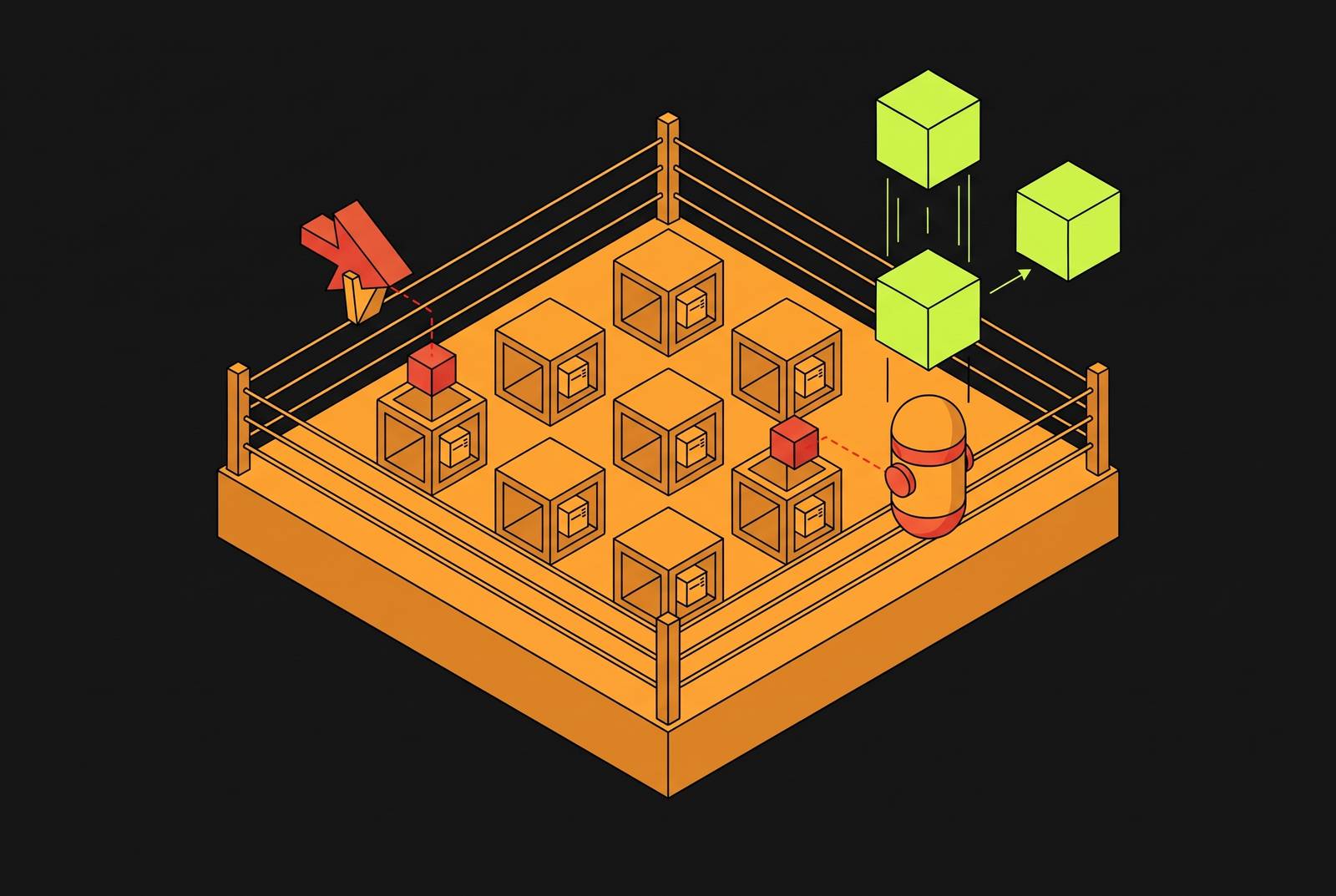
For engineering teams choosing cloud coding agents, the best fit is a harness paired with an execution platform that meets the workload’s isolation, state, and network requirements. This comparison examines which managed platforms give Cursor and Codex a clean VM per task. A “sandbox” label is insufficient because a private guest kernel, task-scoped credentials, controlled egress, and explicit teardown determine both security and reliability.
Why VM-per-task isolation is not the same as "sandboxed"
Docker wrote about an incident in which an agent used rm -rf on a home directory. Coding agents read files, run commands, install packages, and run tests before a human looks over a diff. A prompt-injected instruction can redirect those actions, so the execution boundary must contain more than an incorrect code change.
“Sandboxed” describes a spectrum of substantially different boundaries. OS-level controls such as Landlock, seccomp, Seatbelt, and bubblewrap constrain a process but share the host kernel, leaving a possible escape path through a kernel exploit. gVisor interposes a user-space application kernel without providing hardware isolation. MicroVMs instead boot their own guest kernels behind a hardware-virtualization boundary, while full VMs occupy the strongest-isolation, highest-overhead end of the spectrum. These architectures are not interchangeable.
A private guest kernel separates a workload from the shared-kernel escape path, but it does not make every operation safe. Network access, credentials, and inherited files each need their own checks. The platform therefore determines both how far a compromised agent can reach and whether a new task begins with state left by an earlier one.
How Cursor and Codex approach isolation by default — and where each leaves a gap
Cursor and OpenAI Codex approach isolation from different directions. Cursor’s IDE execution does not supply a separate VM boundary, with agent actions operating in the IDE’s process space. Its local sandbox layer, rolled out across macOS, Linux, and Windows in early 2026, adds controlled boundaries and permission requests when an agent needs to step outside them, most often for internet access. Those controls constrain local actions without creating a private guest kernel. Permissions and virtualization solve different parts of the problem.
Codex CLI enables sandboxing by default. On Linux, it combines Landlock for filesystem access control with seccomp for syscall filtering. For cloud tasks, Codex creates an isolated container and clones the repository and configured dependencies into it. OpenAI’s documentation describes a two-phase runtime in which setup can access the network to install dependencies, while the agent phase runs offline by default. Each task has its own container, but that container shares a host kernel.
Claude Code illustrates the same distinction between local and cloud execution. Its local Bubblewrap or Seatbelt sandbox is opt-in, while its cloud sessions run in microVMs. For teams using Cursor or Codex in CI/CD or around sensitive systems, built-in restrictions provide part of the protection, while hardware isolation depends on the execution platform. Strict isolation or compliance requirements make that additional boundary a requirement for platform selection.
What a genuinely clean VM per task requires — the criteria that separate architectures
A clean VM per task needs five things from its architecture. The first is a private guest kernel, with hardware virtualization separating the task from the host. The second is no inherited filesystem, memory, or running processes from an earlier task or tenant. These properties answer different questions about the environment.
The third property is controlled egress through an allowlist or proxy. This limits routes for credential exfiltration and prompt-injection callbacks. The fourth is task-scoped secret injection, which supplies credentials per request and keeps them out of the base image and out of reach after the task ends. Kernel isolation does not replace either control. A task can have its own VM and still receive broader network or credential access than its work requires.
The fifth property is a defined lifetime and teardown model. Ephemeral tasks are destroyed after completion, while persistent workspaces need explicit snapshots or checkpoints. Persistence creates a real architectural tension here. Long-running refactors and repeated test runs benefit from retained files, but a persistent workspace is not a fresh environment for every task. The comparison therefore turns on what each platform preserves, what it discards, and which of the five controls its documented design supplies.
Firecracker-backed platforms: Fly.io Sprites, Vercel Sandbox, and Docker Cloud Sandboxes compared against the criteria
Fly.io Sprites, Vercel Sandbox, and Docker Cloud Sandboxes share a Firecracker foundation, giving their workloads private guest kernels. Their state models and integration surfaces differ substantially. In particular, persistence can be an intentional product feature. The distinction is whether the intended unit of work is a fresh task or a returning workspace.
Sprites favors the returning workspace. Each Sprite has a 100 GB filesystem backed by durable object storage, retaining files across inactivity. Filesystem checkpoints support disk rollback but do not restore process memory, so restoring files does not resume an in-flight process. Fly.io CEO Kurt Mackey describes the rationale as avoiding the repeated development-environment rebuild that ephemeral execution imposes when an agent picks up another PR. Teams building their own orchestration can also use Fly Machines, the underlying general-purpose layer.
Vercel Sandbox targets code generation, live previews, and experimentation, and reached general availability on January 30, 2026. Its Firecracker microVMs provide the guest-kernel boundary, while filesystem snapshots provide persistence between running sessions. Its first-class integrations include AI SDK and OpenAI Agents SDK. Those integrations shape its practical fit for teams already building generative workflows in that ecosystem. They do not, by themselves, establish task-scoped secret handling or a particular egress policy.
Docker’s offering emphasizes a local-to-cloud handoff for coding agents, including Codex, with hours-long tasks running in Docker-managed microVMs. Each task gets its own microVM and set of policies. Built-in MCP access, per-request secret injection, and network policies address the credential and egress criteria directly. Capacity ranges from 1 vCPU/2 GiB to 16 vCPU/32 GiB, with pay-as-you-go metering by the second. This suits Docker-native teams that want concurrent refactors, tests, or documentation rebuilds without managing VM images and secrets themselves.
None of these three has bring-your-own-cloud deployment by default. Provider-managed execution therefore remains a separate decision from kernel isolation. Teams with strict data-residency or VPC requirements need to check whether the managed network meets them. The features described here also leave some lifecycle and credential guarantees unproven for each product.
Northflank and Cloudflare Sandboxes: different isolation primitives for different constraints
Northflank Sandboxes uses Kata Containers with Cloud Hypervisor as its alternative to Firecracker for managed CPU sandbox isolation. Cloud Hypervisor is a Rust virtual machine monitor led by a vendor, and with this architecture the workload has its own guest kernel. Firecracker is not the only route to that boundary. Northflank supports repository builds, test suites, scripts, APIs, and other tool-driven work, with custom container images supplying repository-specific runtimes, system packages, and build tools.
Its deployment model is the sharper distinction for regulated teams. Through bring-your-own-cloud deployment, Northflank manages Kubernetes for sandboxes inside the customer’s cloud account and VPC. It is the option in this comparison that offers that placement within the customer’s own network boundary.
Pausing stops running processes and discards ephemeral files, while attached volumes retain files across the pause. Before pausing, teams need to save any repository changes and artifacts they want to keep to attached storage. This model fits custom build and test environments across many concurrent tasks, especially where BYOC is required.
Cloudflare Sandboxes follows a different path through V8 isolates. It reached general availability on April 13, 2026, on the Workers Paid plan. Cloudflare announced Cursor Cloud Agents support on September 2, 2026, placing terminal, filesystem, and browser tool calls inside customer-controlled sandbox environments. The integration provides control over execution placement. Its edge-scale, ephemeral model fits short-to-medium tasks where geographic distribution and network control take precedence over a persistent workspace, particularly for Cursor Business customers already using Cloudflare.
What Cursor's self-hosted agent execution and Codex's DevDay changes mean for platform selection
Cursor’s September 3, 2026 change made the split between the agent loop and where the work runs more explicit. Cloud agents can run on team-managed machines in pools that scale with demand or through supported sandbox providers, while the loop remains inside Cursor. The Cloudflare integration is relevant at this boundary because it changes where tool calls run without requiring the team to replace its harness.
Cursor says autonomous agents operating in cloud sandboxes now create a majority of the pull requests it merges. It places review and handoff within the practical workflow rather than treating shell execution as the final outcome. For platform selection, the implication is that execution infrastructure must support sustained engineering work.
OpenAI’s DevDay announcements on September 29, 2026 move Codex toward more persistent, configurable cloud environments. Teams can use these reusable development environments from any device, with less work to start a task and with approved settings and permissions shared across them. Teams need to check whether the native environment gives them what they need or whether the shared-kernel container boundary leaves some requirements unmet. More ways to configure the environment do not by themselves give it hardware isolation or the same provider interface that Cursor offers.
Codex Security Cloud makes a different lifecycle choice. Each security job runs in an ephemeral container with session-scoped tools, followed by teardown after artifact extraction. Patches are not auto-applied, and a draft PR opens only when the team chooses to create one. This comes close to meeting the task-lifetime part of the clean-VM standard, though it supplies no private guest kernel. Together, these changes make the relationship between harness and environment more consequential, but they do not make the tools’ execution architectures identical.
How should engineering teams match a managed sandbox platform to the workload rather than the benchmark?
Engineering teams can run cloud coding agents without managing execution infrastructure by pairing their harness with a managed sandbox suited to the work. Does every task need its own guest kernel, or is a shared-kernel or isolate boundary sufficient for the workload? Does compliance require execution in the team’s VPC, or can a provider-managed network with egress controls meet the requirement? Does the agent need to keep workspace files, or should every task start fresh?
Sprites fits agents returning to long-lived workspaces where repeated environment rebuilds are expensive. Northflank combines custom repository environments and attached storage with a BYOC option. For short-to-medium Cursor tasks, Cloudflare provides a direct customer-controlled execution path, while Vercel fits code generation and live previews in its existing ecosystem. Docker’s offering suits teams that want a local-to-cloud handoff with per-request secrets and network policies built into the platform.
A benchmark cannot resolve those architectural differences. Faster startup does not establish clean state, and persistent files do not establish safe task boundaries. The durable selection principle is to keep the execution requirements independent of a particular harness integration. As Cursor’s execution pools and Codex’s configurable environments evolve, a platform tied too closely to one integration may require reconsideration when the preferred model changes. The environment deserves the same scrutiny as the agent because it determines what the agent can access, preserve, and affect.