Swapping Coding Agents Without Migrating Workflows
Decouple agents from workflows so a model swap becomes a config edit.
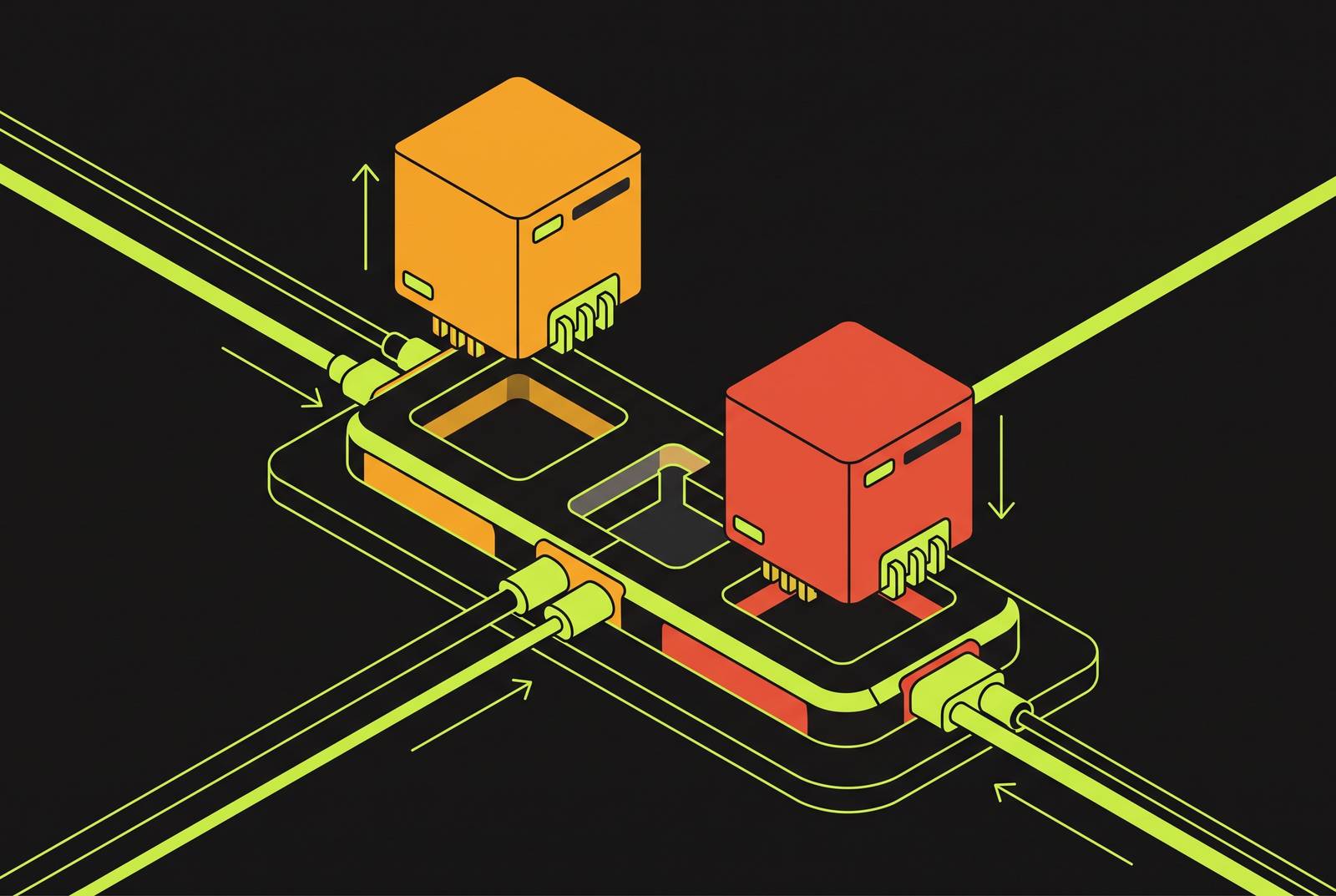
A workflow that ran cleanly on Claude Code breaks the moment a team tries to move it to Codex, because the workflow was never built to survive the move, even though Codex is not less capable. A downstream step expects a tidy JSON object, and the new model wraps it in markdown instead. If a step quietly assumed the old model could handle a much larger context window, it chokes on the new one's limits. None of this happens because the replacement model is worse. It happens because the workflow was wired to the specific quirks of the model it was built around: swapping the model means re-tuning prompts that were never meant to be portable, hunting down hardcoded model references scattered across dozens of steps, and discovering, usually mid-run, that nobody wrote down which steps needed vision support or function calling.
Every one of these breakages traces back to the same mistake: the agent was treated as part of the workflow's foundation when it is actually a part sitting on top of it. Claude Code, Codex, Cursor, and Opencode differ mainly in surface and execution model, not in some fixed ranking of capability, so on paper a swap between them should be close to painless. In practice, the pain occurs where the workflow and the model got fused together. The rest of this piece treats that fusion as the problem to solve, one layer at a time.
What decoupled architecture means in a coding agent workflow
A decoupled workflow treats the agent as a configuration value assigned to a role, not as the thing that defines the role. Each step in the workflow states what it does in terms of input, expected output, and acceptance criteria, and the model assigned to carry out that step lives in a central config file that can be edited in one place, rather than scattered across the logic of the workflow itself. Swapping an agent becomes a matter of changing one entry, not rewriting a system.
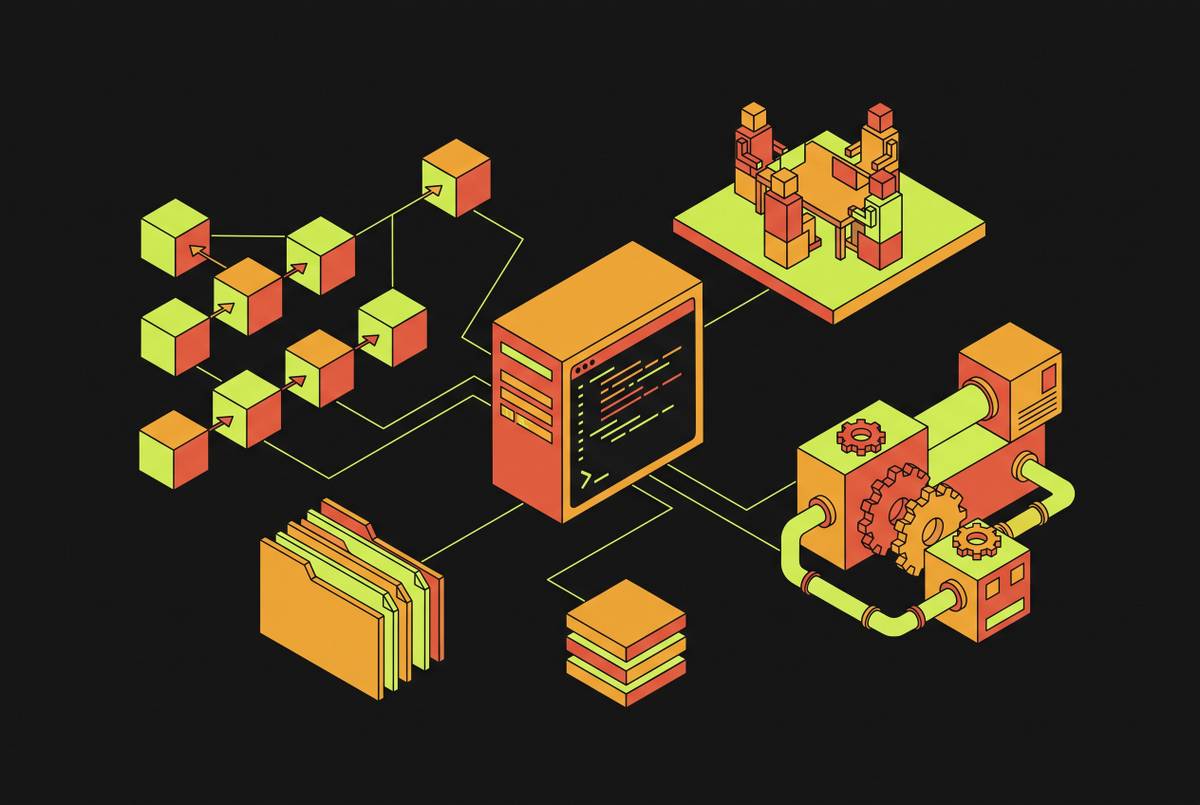
Three layers make this real. The first is model assignment as configuration: step definitions and model choice live separately, so a deprecation or an upgrade touches only one file. The second is prompt portability: instructions should communicate intent clearly enough to work across capable models, with output format spelled out explicitly, exact schema, few-shot examples, rather than left as an assumption the first model happened to satisfy. A prompt that only works on one model is carrying hidden, model-specific baggage that will surface as a bug the day the model changes. The third layer is defined interfaces between steps: a lightweight validation check, run before a result passes from one agent to the next, confirms the output matches the expected schema and that required fields are present. This check makes each step genuinely independent, so a failure is visible at the exact step where it happened, not three steps downstream.
After Codex shipped sub-agent support on March 16, 2026, a practitioner ported a complete sub-agent workflow framework from Claude Code to Codex CLI with close to zero friction. The lesson drawn from that port was direct: design workflows around agent roles and context separation rather than tool-specific features, and the investment survives platform shifts. The only real friction in that migration was file format translation: agent definitions moved from Markdown with YAML frontmatter to TOML files, and configuration moved from the .claude/ directory to .codex/. The logic underneath, the roles, the context boundaries, the step definitions, didn't need to change, and that's what decoupling buys a team: a migration that would otherwise be a project becomes a file conversion.
The same discipline should extend to documenting capability requirements up front. Does a given step need vision, a long context window, function calling, or structured output support? If you write that down next to the workflow design, a model substitution becomes a checklist comparison, not a guessing game run under deadline pressure.
How MCP separates tool capability from agent identity
Decoupling at the level of workflow design solves half the problem. The other half is tool integration, and that's where the Model Context Protocol does the heavy lifting. A git MCP server, a Linear MCP server, or a GitHub MCP server behaves the same way no matter which agent is calling it, whether that's Claude Code, Codex, Cursor, or Opencode. Tool integrations built on MCP don't need to be rebuilt every time a team changes which agent it's running.
This isn't a fringe bet on an unproven protocol. GitHub, Stripe, Supabase, Linear, Notion, and Slack all ship official MCP servers, and the Model Context Protocol SDK had crossed into nine-figure monthly downloads as of April 2026, a sharp rise from its December 2025 baseline. Adoption at that scale means a team building on MCP is building on infrastructure the rest of the industry is also standardizing around.
MCP also draws a cleaner boundary around execution. In an MCP-native setup, the agent, the language model itself, runs outside the sandbox and issues structured tool calls; MCP servers take those calls and proxy them into sandboxed execution environments, so the agent never touches the host directly. The part of the system most exposed to prompt injection, the model's own reasoning, never gets direct access to host execution. The MCP server sits in between as the gateway, and it enforces what's actually allowed.
The GitHub MCP server shows how this plays out with permissions. It surfaces a defined set of tools and hides what a classic personal access token doesn't cover, but if you use fine-grained PATs or OAuth tokens, you see the full tool set, and the API enforces permissions instead. An agent running on a read-only token simply won't attempt to push a commit. An agent without org-admin scope won't even see org-admin tools in its available set. The same MCP layer serves agents with very different permission profiles without anyone reconfiguring it by hand for each one.
Linear's integration setup shows how wide this range can get. As of September 2026, Linear offers five separate paths into agent work: opening an issue directly in Claude Code or Cursor, giving an agent read/write access through Linear's hosted MCP server, delegating an issue to a cloud agent from Linear's agent directory, delegating to Linear Agent (which runs coding sessions through Claude Code or Codex inside a managed sandbox), or routing work through a label-driven harness. MCP is what makes most of those five paths agent-agnostic in practice, rather than five separate integrations a team would otherwise need to maintain by hand.
Where Claude Code, Codex, Cursor, and Opencode differ
With decoupling and MCP as the backdrop, you stop ranking the four major agents against each other and start asking which one fits. Claude Code, Codex, Cursor, and Opencode differ mainly in surface and execution model, not in a fixed capability hierarchy, so the right question for a swap is which agent suits a given task and workflow, not which one scores higher on some general scale.
Claude Code is terminal-first, and it's built for deep autonomy across complex, multi-file work. Its execution model runs locally, which makes it the most privacy-preserving option among the four for sensitive codebases: Anthropic processes the prompts, but the agent itself runs on the developer's machine. Anthropic has also released an open-source Sandbox Runtime, a lightweight, container-free tool that enforces filesystem and network restrictions on arbitrary processes at the OS level, and you can get it now as an open source research preview.
Codex works across multiple surfaces and bundles into ChatGPT subscriptions, which lowers the barrier to trying it inside a team that already pays for ChatGPT. Its sandbox isolation is on by default in the CLI. Codex shipped sub-agent support on March 16, 2026, and that's the same event that triggered the Claude-Code-to-Codex port described earlier.
Cursor keeps the agent inside an AI-native code editor rather than a terminal, and it mixes local and cloud processing. Its isolation model is process-level only, a weaker sandboxing posture than Codex or than Claude Code running with its sandbox enabled.
Opencode is the open-source option among the four, available through a terminal interface, a beta desktop app, and an IDE extension, with documentation that covers planning a change before implementing it, adding project-level instructions, and undoing a turn. That range of surfaces means a team can work with Opencode without an editor migration as a precondition.
Sandboxing posture is the sharpest practical line between the four: Codex CLI isolates by default, Claude Code's sandbox has to be turned on, Cursor offers only process-level isolation, and Opencode's posture depends on how it's deployed. Cost and execution also diverge in ways that matter once a team scales past a single developer: Claude Code uses more tokens per task than Codex, which raises the cost of running agents in parallel across a team. That's not a reason to avoid Claude Code. So a team can route specific task types to the agent whose cost and execution profile fits that task: architecture and debugging work go one way, rapid feature development or automated delegation go another.
Sandboxed environments as the stable layer that absorbs agent swaps
If the agent comparison above makes anything clear, it's that no single agent is the fixed point in a multi-agent setup. The fixed point should be the environment the agent runs in. When the execution environment is fully configured and isolated per run, the agent itself becomes interchangeable at the infrastructure level: the VM or container carries the team's dependencies, tooling, and permissions, and whichever agent gets dropped into it starts from the same place every time.
This is why environment investment and agent investment behave so differently over time. Tuning prompts to one model's quirks, or scattering configuration across workflow nodes, depreciates the moment that model gets swapped out. Investment in the environment itself, dependency snapshots, permission policies, integration configs, MCP server setup, carries forward across agents and gets more valuable as a team adds more of them to the mix.
For teams running several agents in parallel, this argument isn't abstract. Each agent run gets its own sandboxed VM, preloaded with the team's dependencies and tooling, so an agent can install packages, run services, drive a browser, and check its own work before handing it back. That setup makes a cloud agent environment functionally equivalent to a developer's own machine, with the added benefit that it's reproducible and swappable in a way a laptop never is.
Integrating agents into existing workflows without making the agent the workflow
So the environment argument extends naturally into how agents connect to the tools a team already uses. If a team built its trigger-and-review loops around Slack, Linear, and GitHub, not around whatever interface a given agent happens to ship with, it can swap agents freely. Swapping the agent, in that setup, never touches the places where engineers actually do their work.
Linear's five integration routes, current as of September 2026, show what this looks like in practice: opening an issue directly in Claude Code or Cursor, giving an agent read/write access through Linear's hosted MCP server, delegating the issue to a cloud agent from Linear's agent directory, delegating it to Linear Agent (which runs the coding session through Claude Code or Codex in a managed sandbox, billed from a prepaid workspace pool of AI credits at provider rates with no markup, plus sandbox runtime billed per 20-minute block, and requiring a GitHub connection with code access), or routing it through a label-driven harness that turns issues into prepared agent workspaces on infrastructure the team controls. Across all five, the Linear side of the workflow stays exactly the same: the issue, the discussion thread, the pull request, the review loop. Only the agent underneath changes.
The same principle holds for Slack and GitHub. An agent triggered from a Slack message, or surfaced inside a GitHub pull request review, can be swapped out at the agent layer without disturbing the channels engineers already use to receive and review work. Background agents that return a finished pull request fit this pattern more naturally than interactive copilots do: a pull request is a native GitHub artifact, reviewable by any engineer regardless of which agent produced it, while an interactive session is a surface that may be tied to one agent's particular interface.
Measuring agent work in a way that survives agent changes
None of this is worth building if a team can't tell, afterward, whether a given agent actually performed well. Running multiple agents side by side only pays off if a team can see what each one produced, what it cost, and whether the output held up, rather than relying on a general impression of which agent "felt" faster.
Standard metrics mislead here. PR count, lines of code, and commit volume all inflate once agents are in the loop, but they don't have to reflect the value actually delivered. A platform that only records metadata can note that a pull request merged in a given window and changed a given number of lines, but it can't say which lines were agent-generated, which agent generated them, whether those lines needed extra rounds of review, or whether the module they touched caused an incident weeks later. Without that level of attribution, you end up deciding which agent to keep running by intuition, not evidence.
AI-generated code also carries its own risk profile, with higher rates of issues and elevated change failure rates compared to human-written code. Review burden and downstream outcomes need tracking at the level of source, harness, and model, not just at the level of the repository. In teams where AI accounts for a large share of code, review time has already overtaken writing time as the bigger cost. That makes the review bottleneck, not raw generation speed, the place where swapping agents actually pays off: routing task types toward the agent whose output needs less rework is a concrete, measurable gain, not a guess.
Building a workflow where agent choice is a standing team decision, not a one-time migration
The teams that get the most out of each new model release are the ones that treated their original agent choice as a provisional setting, not a structural commitment. When a better model ships, they can swap it in the same day.
Staying harness-agnostic takes upkeep. Capability requirements for each workflow step need to be written down and revisited whenever a new model or agent ships, so a substitution is a structured comparison against a checklist rather than something discovered by trial and error in production. Prompts need to be audited for model-specific assumptions on a regular schedule, not just in the scramble before a swap. Integration configs and MCP server setups should be tested against more than one agent as a matter of course, so that no single agent quietly becomes the default everything else is built around.
The pattern described earlier, routing different task types to whichever agent suits them rather than standardizing on one, holds up only when the architecture supports it: a stable environment layer, tool integration through MCP, trigger and review surfaces that don't care which agent is behind them, and attribution fine-grained enough to show what each agent actually produced. The model landscape keeps shifting, and that rewards exactly this kind of flexibility. The agent leading a given benchmark category today may not be leading it six months from now, and a team locked into a single harness absorbs the cost of that shift.