Claude Code Codex Cursor OpenCode Deployed on Cloud VMs Which Agent Setup Wins for Engineering Teams
The right cloud setup matters more than which coding agent you choose.
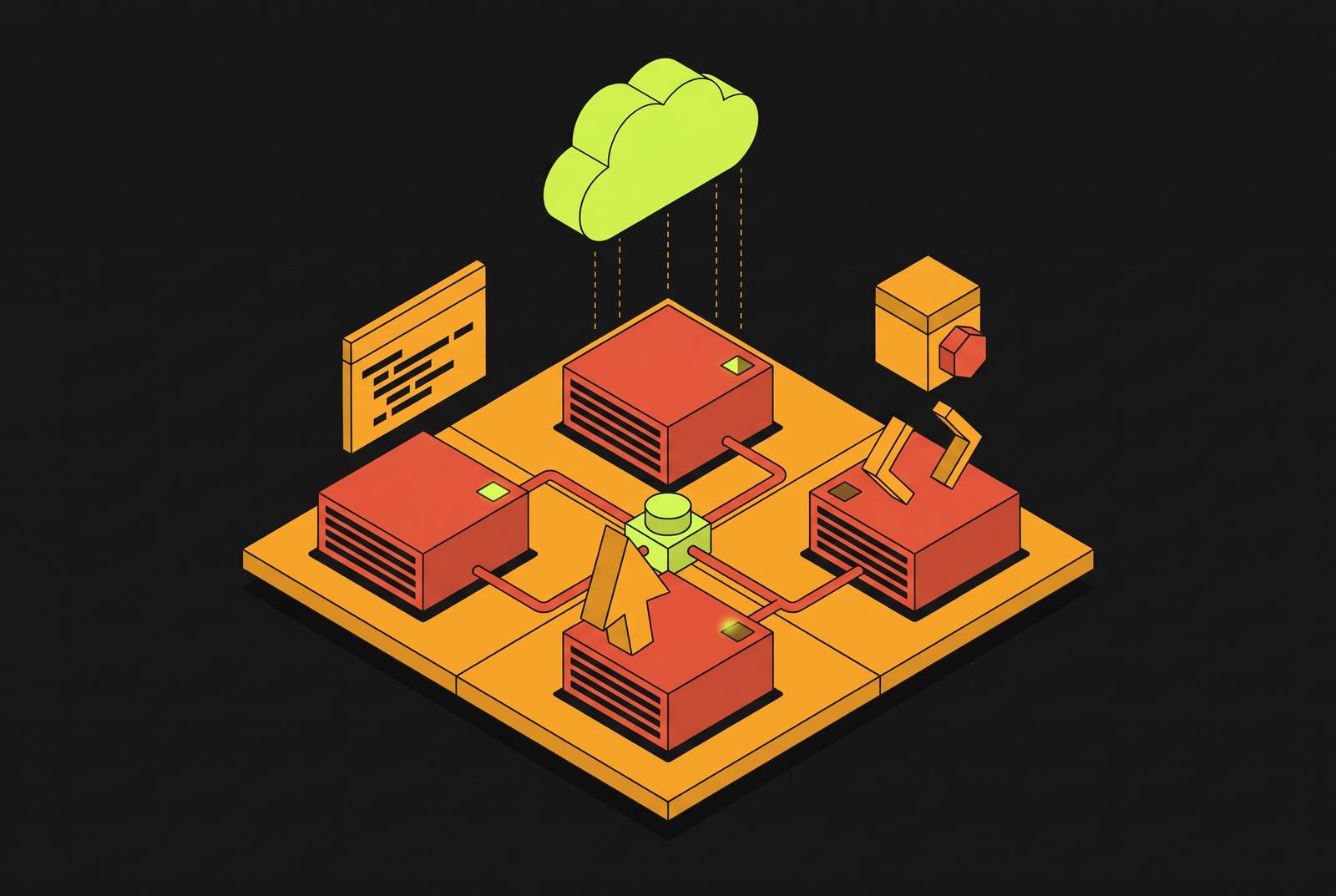
To run Claude Code in the cloud, use Anthropic-managed cloud sessions or a configured, isolated VM that preserves the repository’s dependencies, permissions, and workflows. Teams that want agentic coding without operating infrastructure can use a provider-managed runtime or a harness-agnostic cloud platform. Across Claude Code, Codex, Cursor, and OpenCode, the winning setup depends less on the agent than on the environment’s ability to sustain, isolate, and verify its work.
Why cloud VM deployment shifts the question from "which agent?" to "which environment?"
A coding task needs more than a capable model. It needs a filesystem it can change safely, dependencies it can execute, network access governed by policy, and a process that survives a laptop disconnect. A thin or shared environment constrains the agent regardless of its reasoning ability. A fully configured, isolated VM lets it install packages, run services, drive a browser, and check its own changes.
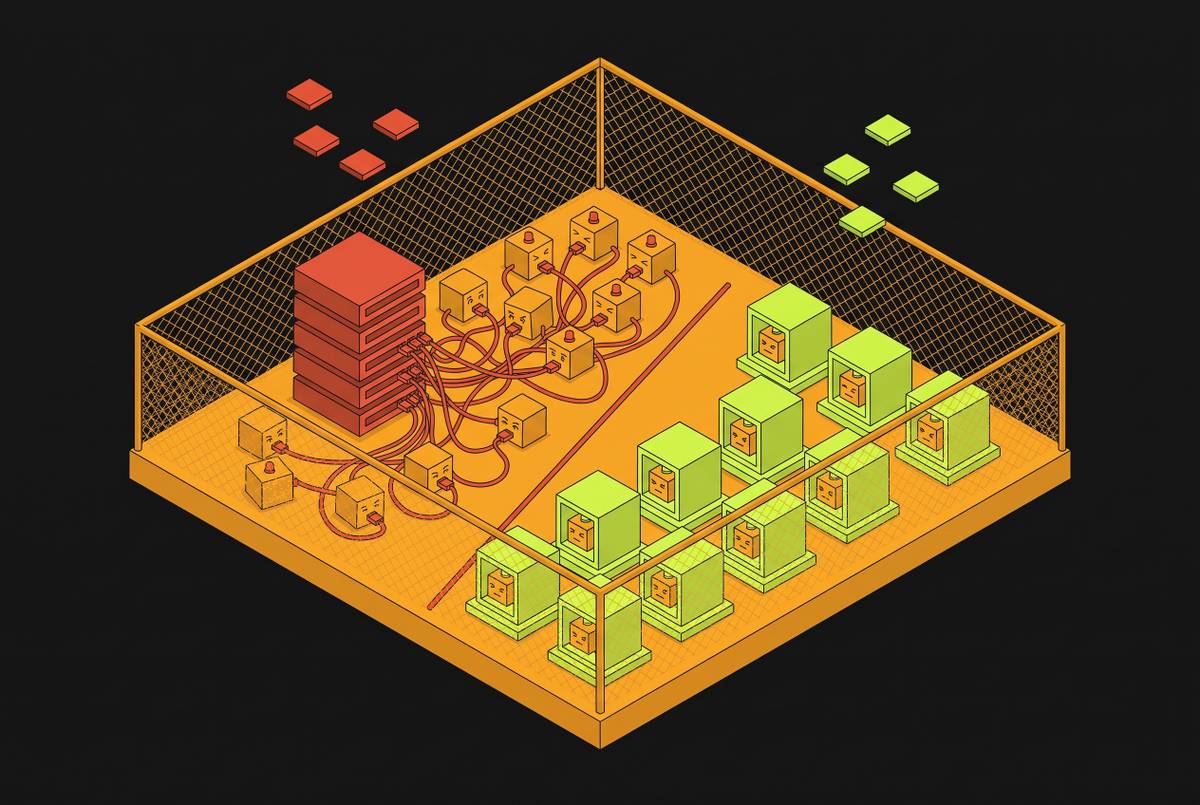
The structural divide is between provider-native managed runtimes and harness-agnostic platforms that run different agents in isolated Linux VMs. Managed runtimes absorb operational work but restrict configuration. Portable harnesses expose more controls while leaving more infrastructure responsibility with the team or platform. The comparison therefore evaluates each agent through its execution environment.
What a cloud VM must do before any agent runs a single task
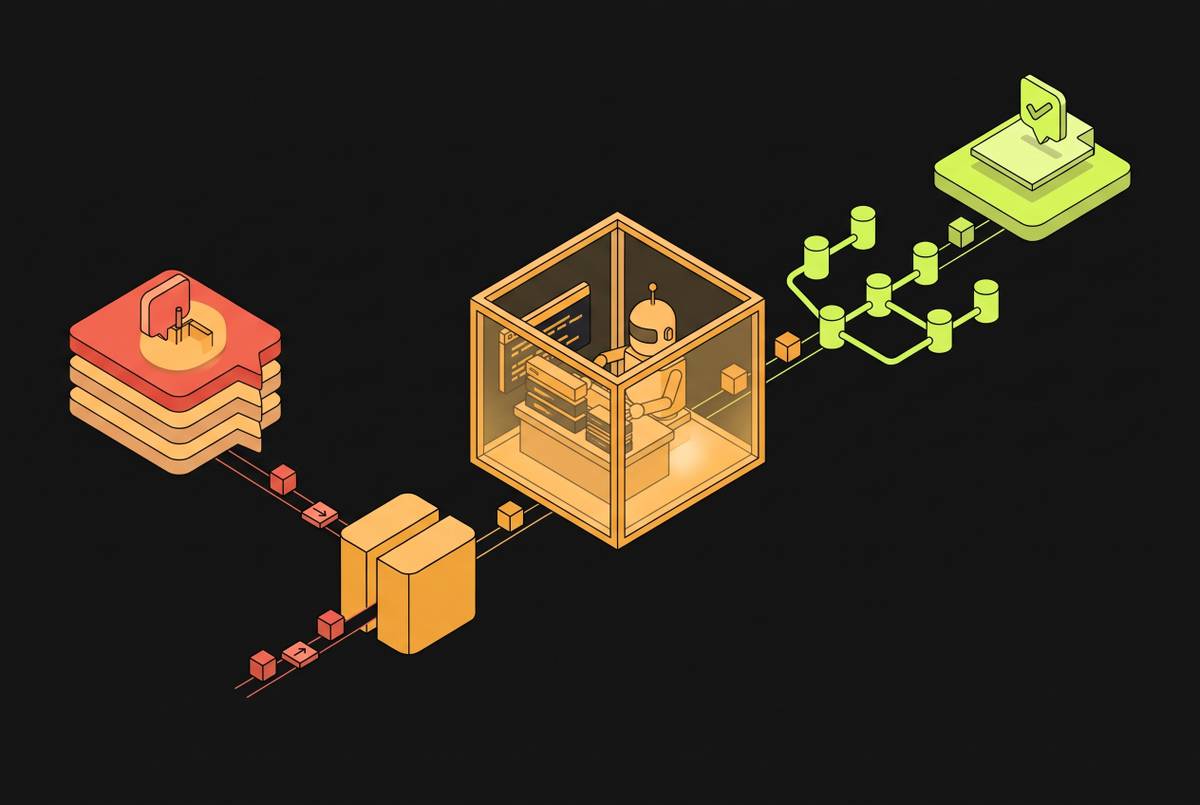
The baseline execution model has four stages, namely intake, isolation, implementation, and verification. Work arrives as a ticket or specification, a sandbox starts and clones the repository, and the agent implements the task inside it. The run then executes the repository’s own checks before the sandbox is destroyed. Verification belongs inside the execution path. Without test dependencies, linters, and CI checks, the agent leaves the engineer who reviews the work to finish checking it.
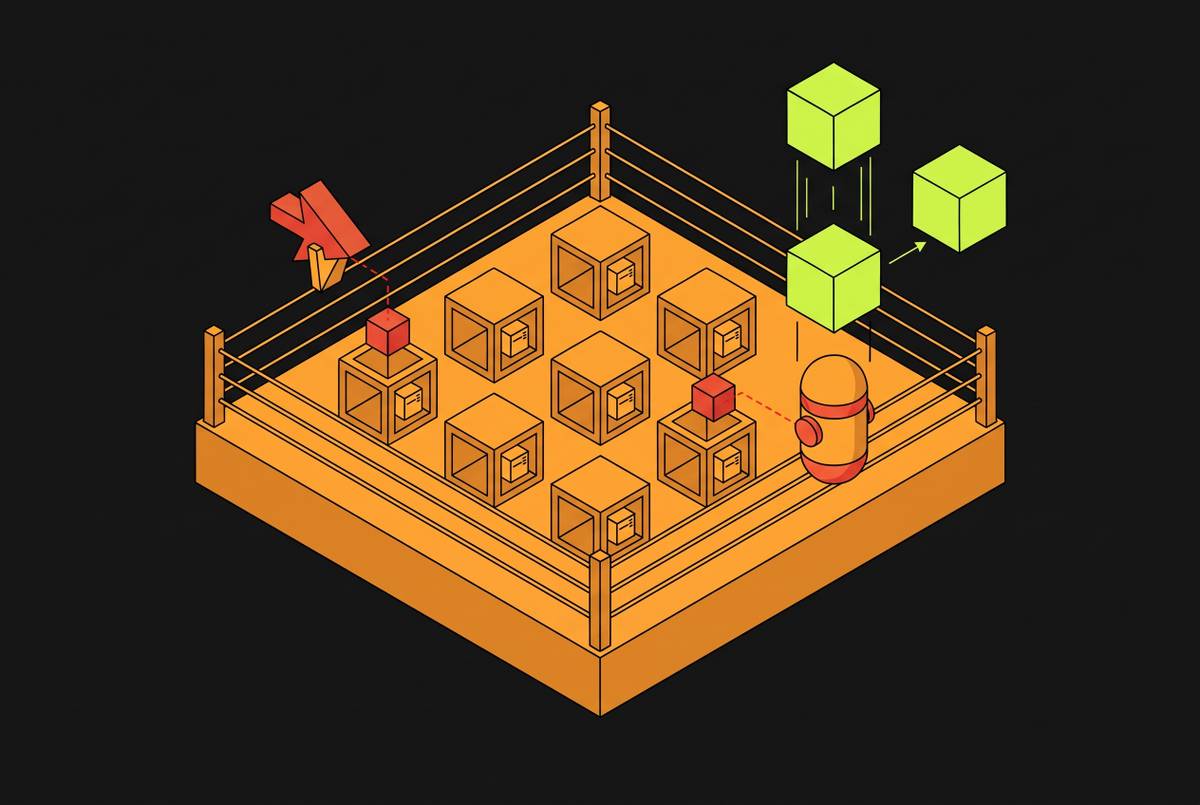
For VM-based deployment, each task needs its own VM. Parallel work on one machine risks state collisions and unreliable verification. The process must also outlive the local laptop, particularly for refactors that take hours. Controlled egress is another prerequisite because unrestricted external content can expose the agent to prompt injection.
Ramp’s Inspect demonstrates that this standard is achievable. It starts fully provisioned remote development environments in seconds from repository images pre-built on a regular cadence. Its sandboxed VMs include Postgres, Redis, Temporal, RabbitMQ, and the full local stack. Filesystem snapshots freeze and restore session state.
How do you run Claude Code in the cloud without breaking its terminal workflows?
Claude Code is especially sensitive to its execution environment because it assumes direct filesystem access and a working terminal. Its strengths include codebase understanding, planning, multi-file edits, and command execution. Those strengths depend on usable shell state. A cold VM without the expected dependencies can frustrate the same workflow that runs reliably on a developer’s machine.
That dependency becomes clearest in Claude Code’s customization layer. Hooks execute shell commands before or after actions, including formatting after edits or linting before commits. Skills package repeatable workflows such as /review-pr and /deploy-staging, while subagents and experimental agent teams divide work across parallel context windows. Routines run cloud jobs on a schedule or when GitHub triggers them. These mechanisms become dependable when the VM contains the repository and the tools they assume.
Configuration portability also has a defined boundary. CLAUDE.md, settings, and MCP servers work across terminal, IDE, and desktop surfaces, but cloud sessions use only repository configuration. User-level settings and local MCP servers are unavailable there. Permissions still matter because writes can reach only the project folder, while reads can reach the entire filesystem by default unless they are explicitly denied. Manual mode requires explicit approvals, while Auto mode uses classifier-based approval. Teams that run cloud sessions at the same time must also plan for shared rate limits.
Codex on a cloud VM: the agent designed for cloud execution from the start
Codex makes the cloud execution lifecycle explicit. When a task starts, it provisions or resumes a cached isolated container based on a configured Cloud Environment. It checks out the target repository’s default branch, runs the agent loop, and returns a diff and pull request link. Runtime ownership is the key contrast with Claude Code. The team supplies configuration within OpenAI’s managed sandbox rather than assembling a general-purpose VM around a terminal harness.
The setup script phase has internet access for dependency installation, while agent execution has no internet access by default. Teams can configure limited or unrestricted access during execution. Codex also supports persistent memory and multi-day automations, with context continuing across cloud, IDE, browser, and CLI surfaces. OpenAI described reusable cloud development environments at DevDay on 29 September 2026, including shared approved setups, permissions, and configurations.
The constraint is the managed sandbox boundary. Teams with specific dependency, network, or compliance requirements have fewer options than on infrastructure they configure themselves. Arbitrary tooling and self-hosted execution are correspondingly less flexible. Codex also ties the workflow to OpenAI’s ecosystem, although its 20+ first-party plugins include Atlassian, GitLab, and Microsoft Suite. The price given is $20/month Plus plus token usage.
Cursor on a cloud VM: IDE-first design meets background agent reality
Cursor is the most widely adopted AI-native editor in this comparison, with strong enterprise deployment. Its tab completion and inline editing help with day-to-day development, while cloud work runs in a different way. Interactive agent mode runs through the editor’s chat and editing surfaces, with visual diff review. Cloud Agents run tasks in the background in isolated VMs and return pull requests. Teams that buy the editor still have no control over that runtime.
The distinction does not narrow Cursor’s workflow reach. Cloud Agents can start through the desktop, web interface, API, and integrations including GitHub, Linear, and Slack. They support repositories on GitLab, Bitbucket Cloud, and Azure DevOps Services, including work across multiple repositories. Cursor’s visual diff interface is its strongest review advantage. Engineers can inspect changes before accepting them without abandoning the editor-centered workflow.
The trade-off appears when teams want harness flexibility. Model usage is metered through Cursor, and its cloud runtime runs Cursor’s agent. Teams cannot treat that workspace as a general-purpose VM for Claude Code or Codex. Reusing existing Anthropic or OpenAI inference contracts, or switching harnesses within one workspace, requires a separate layer.
OpenCode on a cloud VM: maximum provider control, maximum assembly required
OpenCode exposes the infrastructure responsibilities that managed agents absorb. Its permissively licensed codebase is terminal-native, driven by a text-based interface, aware of language servers, and MCP-supported, with access to 75+ providers including Anthropic, OpenAI, and local models. Provider choice is its central distinction. The team can select models without also accepting a provider’s managed execution environment.
That freedom does not include a ready-made operating layer. In a local setup, the team manages the machine, credentials, and path from assignment to reviewed pull request. There is no managed runtime, built-in isolation, or native team-trigger layer. Running in the cloud adds durability and isolation only if someone sets them up. Dependencies, Slack or Linear triggers, and credential management remain assembly work for the team or its platform.
Parallel execution makes that responsibility unavoidable. Separate terminals or worktrees on one machine do not provide sufficient task isolation, whereas properly provisioned VMs let concurrent tasks run independently. OpenCode has no tool cost, but bring-your-own-key API costs scale with token consumption. It fits teams that have the platform engineers to run it and want to choose their providers and audit the source.
How environment quality determines what each agent can reliably do across the four setups
Codex tasks persist in OpenAI’s sandbox, and Cursor Cloud Agents continue in Cursor’s runtime after a laptop disconnects. Claude Code can persist on Anthropic-managed or self-hosted infrastructure. OpenCode requires a persistent VM that the team provisions and maintains.
Parallelism has a different dividing line. Codex provisions a container per task, while Cursor manages isolation for parallel agents. Claude Code’s subagents and experimental agent teams divide context, but their runtime isolation depends on VM configuration. OpenCode likewise needs infrastructure-level separation.
Runtime control reverses the order of preference. OpenCode and Claude Code on self-hosted or harness-agnostic infrastructure expose the most control over tools, dependencies, and policy. Codex offers setup configuration within its sandbox, while Cursor retains ownership of its runtime. Verification remains conditional across all four setups. Each can run repository checks only where those checks and their dependencies are available, so flexibility wins only when it produces a complete working environment.
Workflow integration: how each agent connects to where engineering work already lives
An isolated VM is useful only when work can reach it and results can return for review. GitHub, GitLab, Linear, Slack, and webhook or API triggers are available in some form through these agents or platforms running them. Access is not identical across products. Because OpenCode has no native team-trigger layer, a harness-agnostic platform takes on the work of linking assignment and credentials to an execution environment that is ready to use.
Linear’s coding sessions show how integration and runtime ownership intersect. Linear launched the integration in June 2026 with Node.js, Python, Ruby, Go, PostgreSQL, and Redis, plus environment-specific prepare scripts and variables. It uses Claude Code or Codex to run the sessions it manages. Billing combines model tokens at published provider rates without markup and sandbox runtime at a flat per-block rate.
Other paths preserve different degrees of control. An issue can open directly in Claude Code or Cursor, or an agent can receive Linear access through a hosted MCP server. Teams can also delegate through Linear’s agent directory or use a label-driven harness that prepares workspaces on infrastructure they control.
What teams that have deployed agents at scale learned about environment and harness choices
Shopify’s River illustrates the value of shared workflow and accumulated instructions. In May 2026, Shopify Engineering described River as a Slack agent for the company that had launched a couple of months earlier. At that point, it had co-authored one in eight merged pull requests, with thousands of employees using it across thousands of channels in a 30-day period. Its merge rate improved from roughly a third to more than three-quarters over two months through collective learning and refinement of skills and instructions.
Engineers wanted more parallel agents than local machines could support, leading to the remote environments described earlier. A small platform team now serves a much larger engineering organization. River emphasizes shared learning, while Inspect emphasizes prepared, isolated execution. Both get past the limits of local sessions that reset or compete for the resources of one machine.
Scale also changes what counts as evidence of success. Commit counts and lines of code become unreliable because agents can inflate them quickly. Delivery measures such as lead time and deployment frequency, quality measures such as change failure rate and code churn, and output per unit of real effort are more useful. Review becomes the next bottleneck. Larger agent-generated pull requests can lengthen queues and increase cycle time even as throughput rises.
Choosing the right setup: matching agent and environment to what the team actually needs
The decision rests on runtime control, simultaneous task volume, and where assignment and review happen. Teams seeking minimal environment overhead can choose Codex for OpenAI-native asynchronous work, Claude Code cloud sessions for terminal-first deep work, or Cursor Cloud Agents for IDE-first, review-heavy workflows. Each choice accepts a provider’s runtime boundaries. OpenCode fits teams willing to run the environment themselves so they can choose their providers.
A suitable cloud platform provisions isolated VMs per run, manages credentials centrally, and connects Slack, Linear, GitHub, GitLab, or webhook triggers. That separation lets teams route tasks to different harnesses without rebuilding the workflow. It also reduces dependence on one provider’s model quality, rate limits, and pricing changes.
Accountability belongs in that foundation from the start. Every minute of agent execution should be attributable to a source, harness, model, and credential. Without that record, teams cannot link what they spend to the work they ship or compare how much real effort each setup takes. The best environment is therefore not simply the one that keeps an agent running. It is the one that turns assigned work into verified, reviewable changes under controls the team can sustain.