The Ops Ceiling Where Developer-Maintained Agent VMs Break and Managed Platforms Take Over
Self-managed agent VMs stall when upkeep outweighs what agents save.
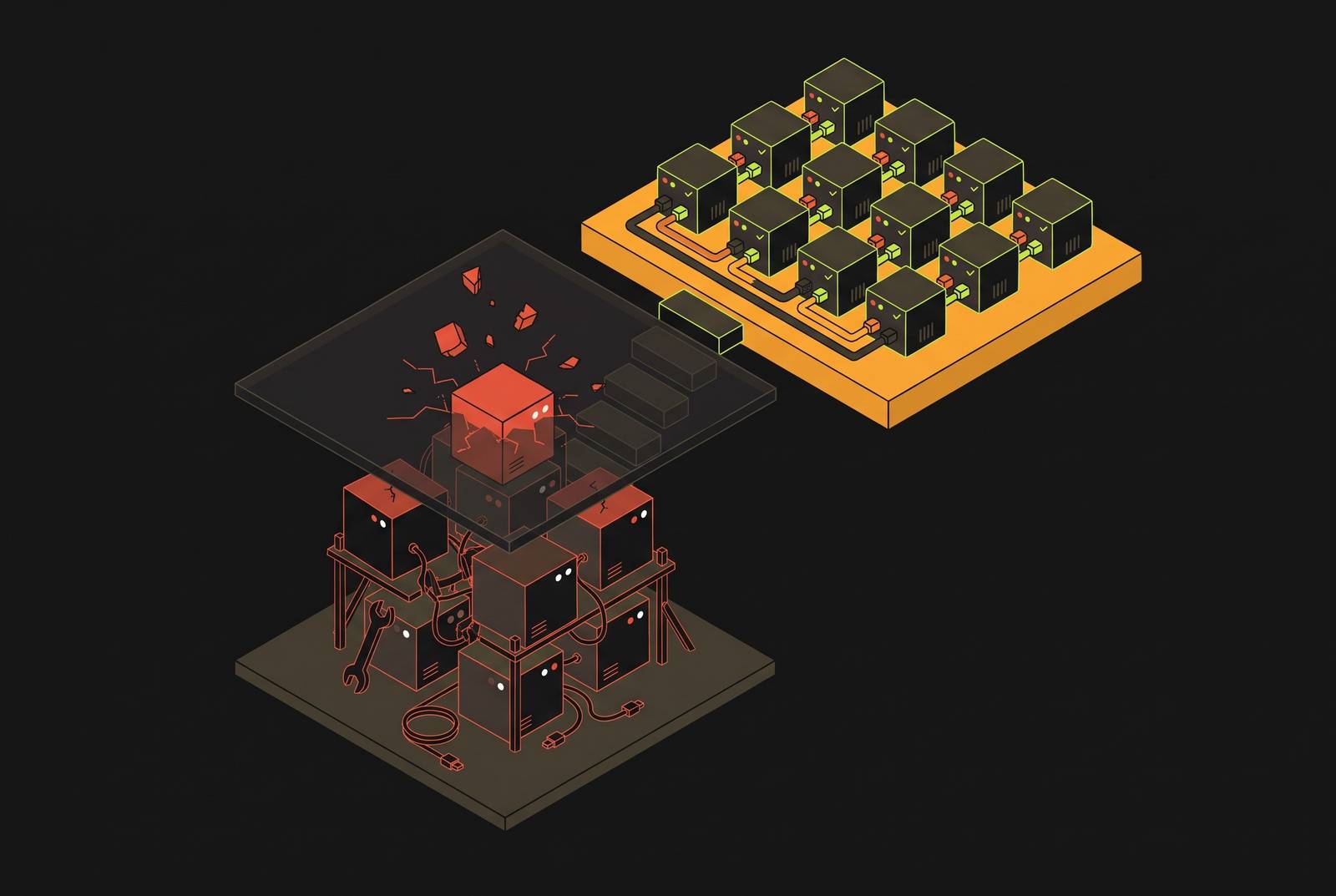
A multi-harness cloud coding agent platform lets teams run more than one coding agent in parallel without having to manage the execution infrastructure themselves. Self-managed agent VMs reach their limit when session isolation, worktree maintenance, credential boundaries, and event-driven triggers take more engineering time than the agents save.
Why self-managed agent VMs work at first and what changes as teams scale
A cloud VM is a rational starting point for a team that already operates cloud infrastructure. It offers full control, low cost, and no new vendor dependency. The immediate benefit is straightforward. An agent keeps working after a developer closes a laptop, long tasks continue through meetings or overnight, and results remain accessible from another device.
For a team with a platform engineer and existing VM infrastructure, a managed layer may add little that the team cannot build itself. That calculation changes as the workload expands. Session isolation, parallel worktree conflicts, credential exposure, and event-driven triggers each give the team a separate job to do. Their combined burden, rather than any single failure of the VM, determines when a useful development machine becomes infrastructure that needs sustained ownership.
How session isolation breaks down when parallel work starts
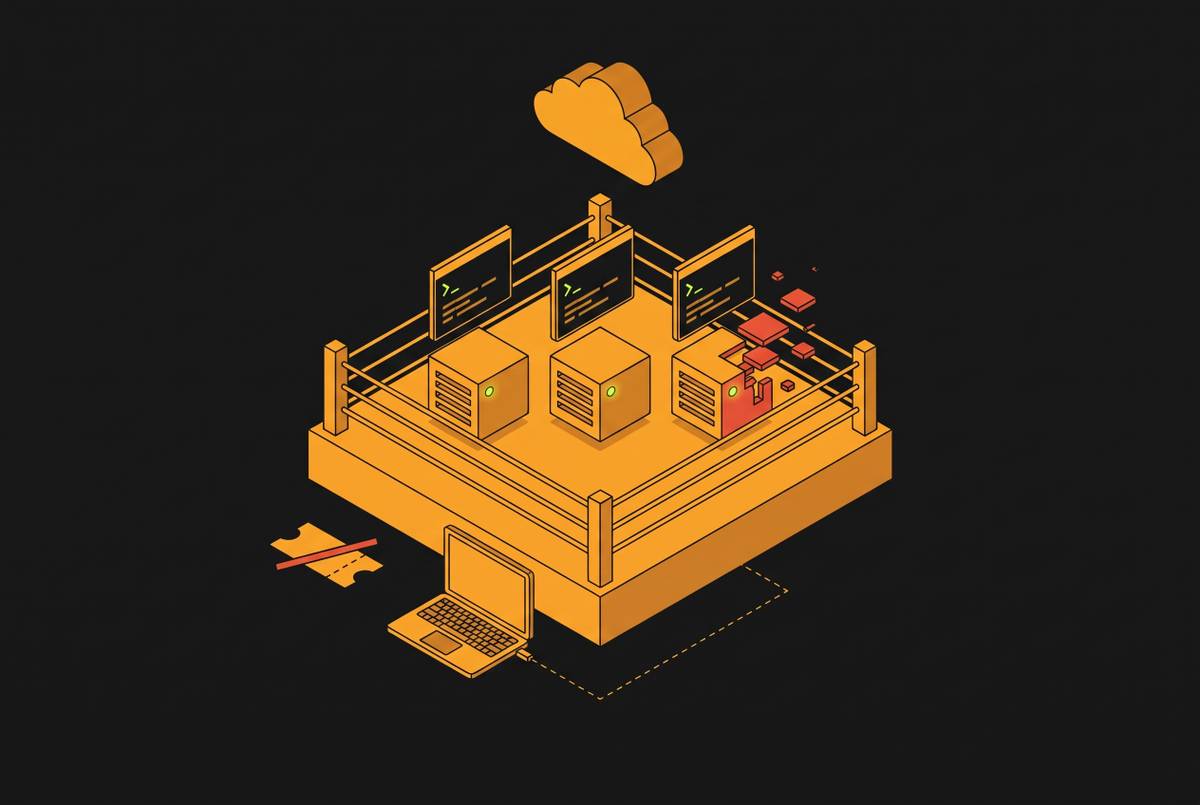
Parallel work introduces the first boundary a shared VM does not provide automatically. Sessions share ports, databases, and memory, while each task needs its own git worktree to keep agents from editing the same files at the same time. File separation is only the first step. A team running three tickets in parallel also needs three separate worktree setups, port assignments, and process supervisors.
The objection that worktree setup is a one-time script is valid only for the initial setup. A script can prepare separate directories, but it does not settle the ongoing problem of port conflicts, dangling processes, and cross-session database state over weeks of parallel work. Those remain shared-machine concerns. Manual worktree and port management grows with the number of tasks in flight, because the VM is being used for several development contexts.
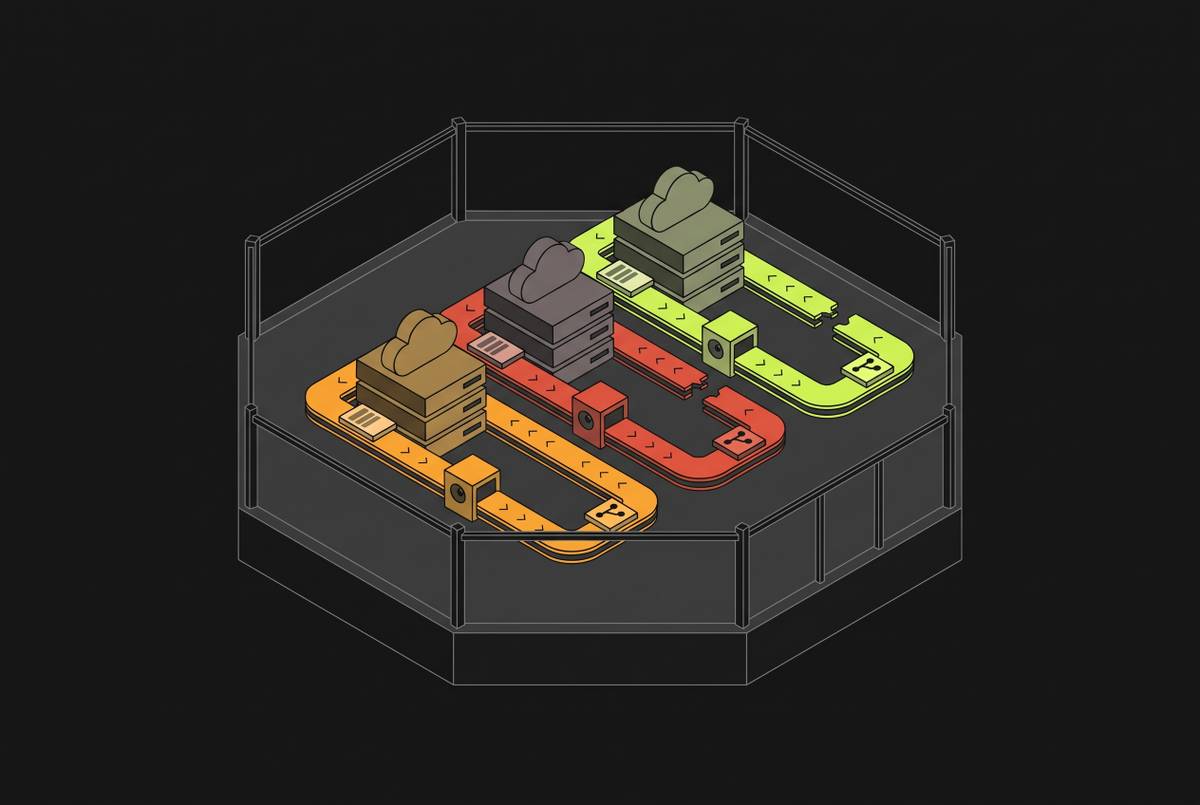
Managed platforms with per-task VMs make the boundary structural. For the same three tickets, the platform sets up three separate machines, so the team no longer has to keep the tasks apart within one. Claude Code cloud sessions work this way, giving each session a fresh Ubuntu VM on eligible plans. That architecture validates the isolation principle without making a single agent harness the only way to obtain it.
The git worktree and environment configuration debt that accumulates on shared VMs
Even when parallel sessions run without conflicts, they leave state behind. Installed dependencies, running processes, cached database contents, and uncommitted files need auditing and cleanup. Stale branches, leftover docker compose services, and modified environment variables can persist after the task that introduced them has ended.
Setup scripts run at VM creation time do not reset the machine between tasks. By contrast, an ephemeral task machine is discarded at session end, while its platform re-runs setup or starts from a cached environment. Claude Code cloud documentation describes a setup script cache that keeps installed files for about seven days, allowing subsequent sessions to start from the cached snapshot and skip the script.
Caching therefore does not have to mean inheriting another task’s unfinished state. The platform manages the reset boundary, whereas a shared VM leaves that responsibility with its operators. As tasks accumulate, configuration debt requires a dedicated platform engineer or periodic VM rebuilds. Neither is free of engineering effort, even when the underlying machine remains inexpensive.
Why credential exposure becomes a structural risk as agent access widens
The same shared environment puts security at risk when agents gain write access across repositories and services. A self-managed VM usually holds long-lived API keys, git tokens, and cloud service account credentials that sessions share. The boundary is the machine. A compromised or misbehaving session can consequently reach more than its assigned work requires.
On a shared VM, an ANTHROPIC_API_KEY, GitHub personal access token, and service account credentials held in the environment are available to processes running as the same user. Nothing in that arrangement creates a per-session credential boundary. It also does not inherently supply an audit log linking credential use to a particular session, automatic revocation, or enforcement of an assigned branch. To add those controls, the team needs more infrastructure than another worktree can provide.
Short-lived tokens rotated by a secrets manager offer a valid partial mitigation. They reduce token lifetime, but they do not narrow the blast radius between co-located sessions that can read one another’s secrets. Ephemeral per-session VMs prevent that shared-machine exposure structurally, while task-scoped credentials restrict what each session can do. Credential isolation and credential scope address different parts of the risk.
A stronger architecture can also keep repository credentials outside the execution environment entirely. Claude Code cloud documentation describes GitHub credentials remaining encrypted on Anthropic’s servers, with a proxy attaching them server-side to GitHub operations. Reproducing that boundary on a self-managed VM is possible only with significant infrastructure work. It is not a property of the VM itself.
Event-driven triggers expose the final gap in the self-managed model
A VM can run a cron job or webhook listener, but receiving an event is not the same as executing a reproducible task. The event needs a reliable path to execution. A GitHub push, Sentry alert, or Linear issue transition must reach an environment with the right code, setup, and credentials before an agent can produce a pull request for review.
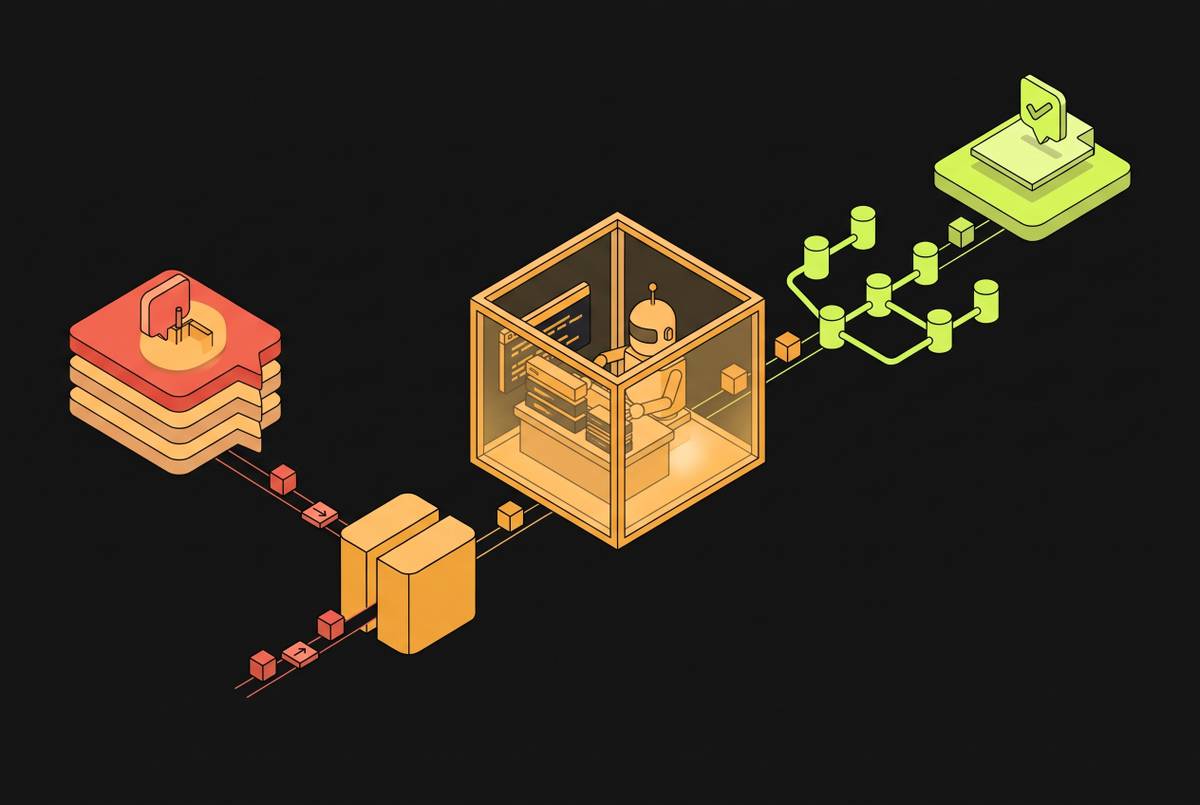
That path joins the earlier pressures together. A Sentry alert must lead to an isolated task, credential injection, agent execution, and a resulting PR queued for review. On a self-managed system, the team owns a persistent webhook server, job queue, environment provisioning scripts, and monitoring for failures across those components. The listener is only the entrance to that system.
Managed integrations make this path part of the platform. Claude Code cloud sessions support scheduled starts, API triggers through HTTP POST, and GitHub events, while Codex’s Linear and GitHub integrations trigger tasks from issues. Linear’s coding sessions gather evidence from Sentry or Datadog through MCP, inspect the codebase, and trace a root cause before producing a fix. Such workflows depend on the trigger-to-environment-to-PR path being automatic.
Commure’s pattern of engineers orchestrating agent fleets and running multiple PRs simultaneously depends on reliable, low-latency execution. A webhook listener that goes down over a weekend interrupts the workflow before an agent begins. At that point, the operational question is whether the team can reliably operate everything that surrounds the agent.
What the threshold actually looks like in practice — and how to recognize it before it stalls delivery
The threshold arrives when maintaining agent execution consumes more effort than agent work saves. Teams can use four checks to weigh the time spent against the time saved. These checks locate the strain without presuming that buying a platform is the answer.
The first check is whether parallel sessions encounter worktree conflicts or port collisions. Those failures indicate that isolation is becoming a delivery constraint. The second check looks for agent failures caused by stale environment state that someone must fix by hand on the VM. That points to configuration debt rather than a problem the agent can solve by writing better code.
The third check concerns authority and accountability. A credential broader than the task requires, or an inability to establish which agent did what, exposes a missing security boundary. The fourth concerns missed work. A Sentry alert or Linear issue that fails to start an agent because a listener is down or a queue is full reveals an execution dependency that needs operational ownership.
At Commure, one engineer ran a roughly 13-ticket initiative with Claude subagents, each owning a ticket and its PR. On a shared VM, that pattern would require a matching set of worktrees and monitoring for the associated processes. Teams with people dedicated to platform engineering can build what they need to work through these limits. Teams need to distinguish planned capacity for that work from recurring intervention that stalls delivery.
What does a managed platform take off the team’s plate when running multiple coding agents in parallel?
A managed platform can absorb per-task provisioning, credential scoping, trigger routing, and environment reset. Each task gets its own execution boundary. The team still writes the setup script, but the platform applies or caches it for each session.
Credential handling can likewise become part of the task lifecycle. Helix issues per-task git credentials at session start and revokes them at session end, allowing pushes to the task’s feature branch and the shared design-docs branch. Platforms still differ in which sources they support and where they set the boundaries.
The review queue remains the team’s responsibility. Cloud agents generate substantially more pull requests, moving the bottleneck from writing code toward verifying it. Even with a managed execution platform, the team must do that work, and proposed changes can still be wrong. The lesson for adoption is to pair execution infrastructure with deliberate review tooling, rather than exchange an operations backlog for an unmanageable review backlog.
How to evaluate managed platforms on the dimensions that correspond to the four pressures
The evaluation should begin with infrastructure fit. Isolation is the first criterion. A task may receive a full VM, a container, or a shared runner, and those boundaries are not equivalent. Full VMs leave the fewest ways for one session to contaminate another, while containers are lighter but share a kernel. Environment reproducibility belongs in the same assessment, including how setup is cached and task state is discarded.
Compute location is a related but separate choice. Northflank Cloud Harnesses run agents in the customer’s AWS, GCP, Azure, Oracle, or CoreWeave account, with a microVM per agent. That model is relevant when data residency or VPC requirements govern execution. Bring-your-own-cloud can keep the customer’s security perimeter in place without the customer having to build the control plane.
The credential assessment should distinguish per-task, ephemeral credentials from long-lived, VM-scoped secrets. Teams should ask whether git access is branch-scoped and whether model API keys remain with their own subscriptions. Bring-your-own-keys keeps model usage and its cost on the customer’s account. It does not substitute for checking the platform’s task-level credential boundaries.
For triggers, the minimum useful set for most engineering teams includes GitHub events, Slack, and issue tracker transitions in Linear or Jira. Teams wanting to invoke Claude Code or Codex from Slack and receive a pull request should evaluate that complete workflow. They should also establish whether each event provisions a fresh environment or reuses a standing session. The former favors isolation, while the latter may be faster for high-frequency events.
Governance and portability complete the assessment. The reviewable unit should be a pull request with a diff and conversation history, supported by logs of agent actions and credential use. Compliance procurement should distinguish audit logs, SCIM, SOC 2, and self-hosting options delivered as product capabilities from professional services engagements. A multi-harness platform should also let teams switch among Claude Code, Codex, and Cursor while keeping the same dispatch or review workflows. Otherwise, managed execution introduces a new harness dependency.
Where the DIY VM remains the right answer and what that choice actually requires
Self-managed VMs remain rational when the team already has the operational capacity or requirements that available managed platforms cannot meet. Custom kernel modules, specific VPC peering, and an existing Kubernetes workflow can justify retaining execution ownership. Some compliance boundaries also rule out available third-party environments, even with bring-your-own-cloud options. In those cases, DIY is a requirements decision rather than a temporary workaround.
Existing orchestration changes the calculation substantially. A platform engineering team may be able to take on agent VM management at little extra cost because it already has the infrastructure around it. The commitment still includes worktree management, credential scoping, event-driven triggers, and audit logging. Choosing DIY means accepting ownership of those layers.
There is also a middle path between a shared VM and externally hosted execution.
The final decision turns on platform capacity. When agent operations fit existing infrastructure and have explicit ownership, DIY can remain the right choice. When isolation failures, cleanup, credential gaps, and missed triggers consume the time agents were meant to save, the team has reached the threshold. Engineering leaders can then choose whether to fund the infrastructure work themselves or transfer those responsibilities to a managed platform.