Claude Code Pull Request Handoff Which Managed Runners Actually Close the Loop Without Human Intervention
Four tests show which cloud runners finish work without a human.
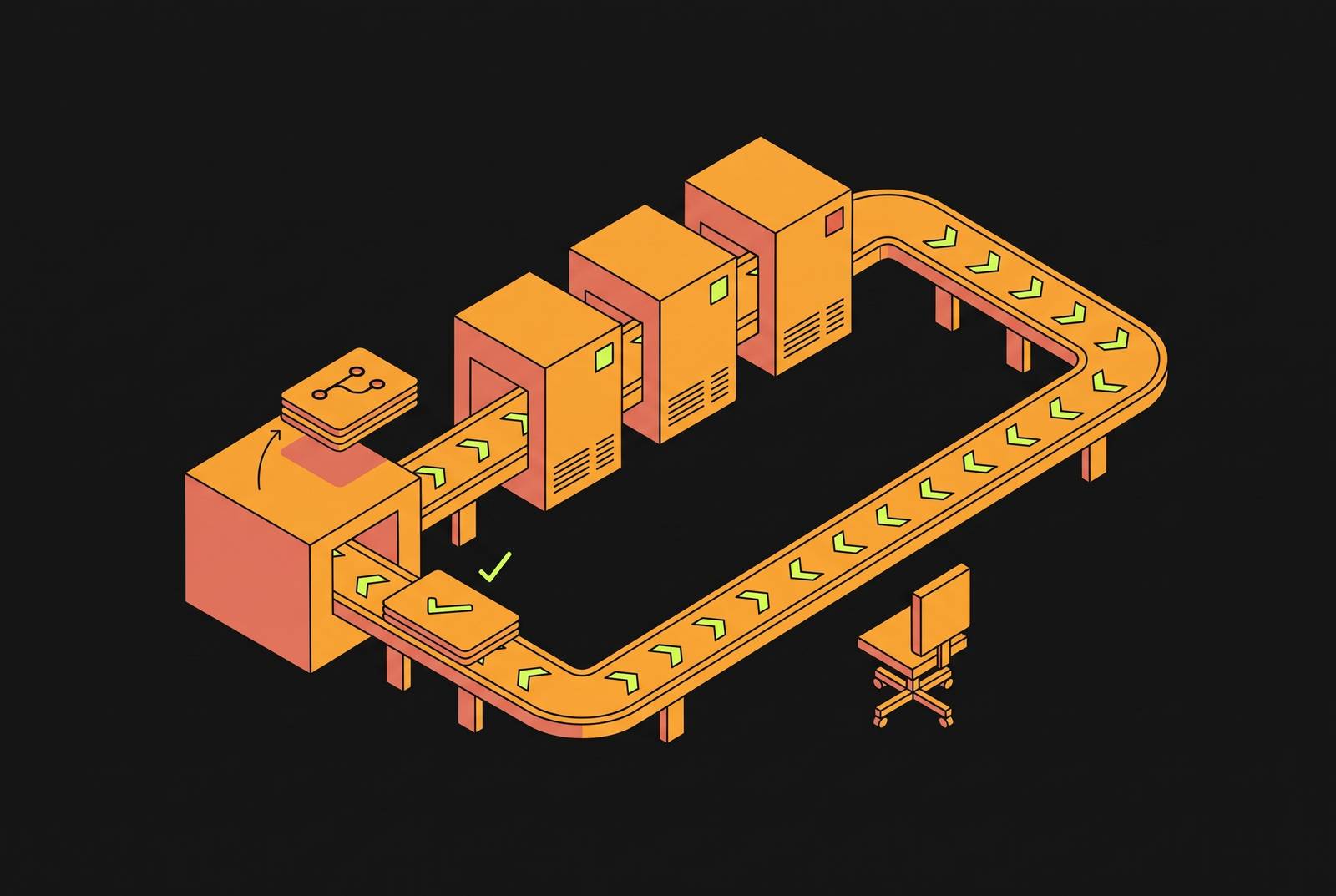
A bring-your-own API key cloud coding agent runner lets a team use its own model account to run agents such as Claude Code or Codex on managed infrastructure. Genuine handoff requires more than remote execution. The runner must start from workflow events, isolate each session, validate changes through tests, and return a reviewable pull request, with governance and agent portability intact.
Why opening a pull request is not the same as handing off work
“Runs in the cloud” describes a location. “Closes the loop” describes work completed without someone shepherding each step. The pitch that “Claude Code keeps working while you sleep” establishes persistence, but says nothing about who starts the session, prepares its dependencies, or checks the result. An overnight session can still leave the developer with the same unfinished work in the morning.
A pull request is an output format that leaves open whether the agent exercised the code it changed. Similarly, a self-hosted runner relocates execution without necessarily adding event triggers, test harnesses, or review workflows.
The four requirements that separate genuine handoff from relocated laptop work
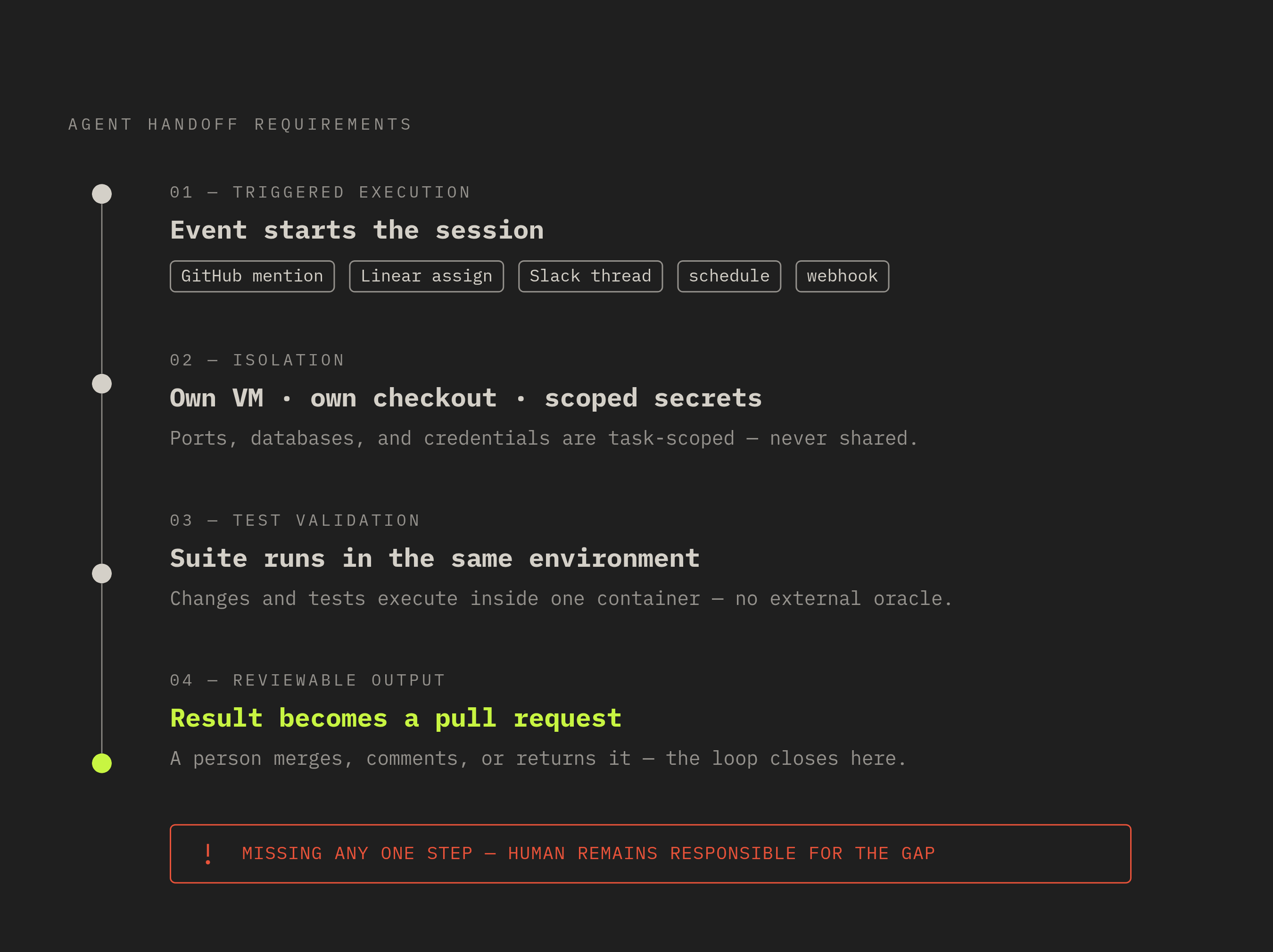
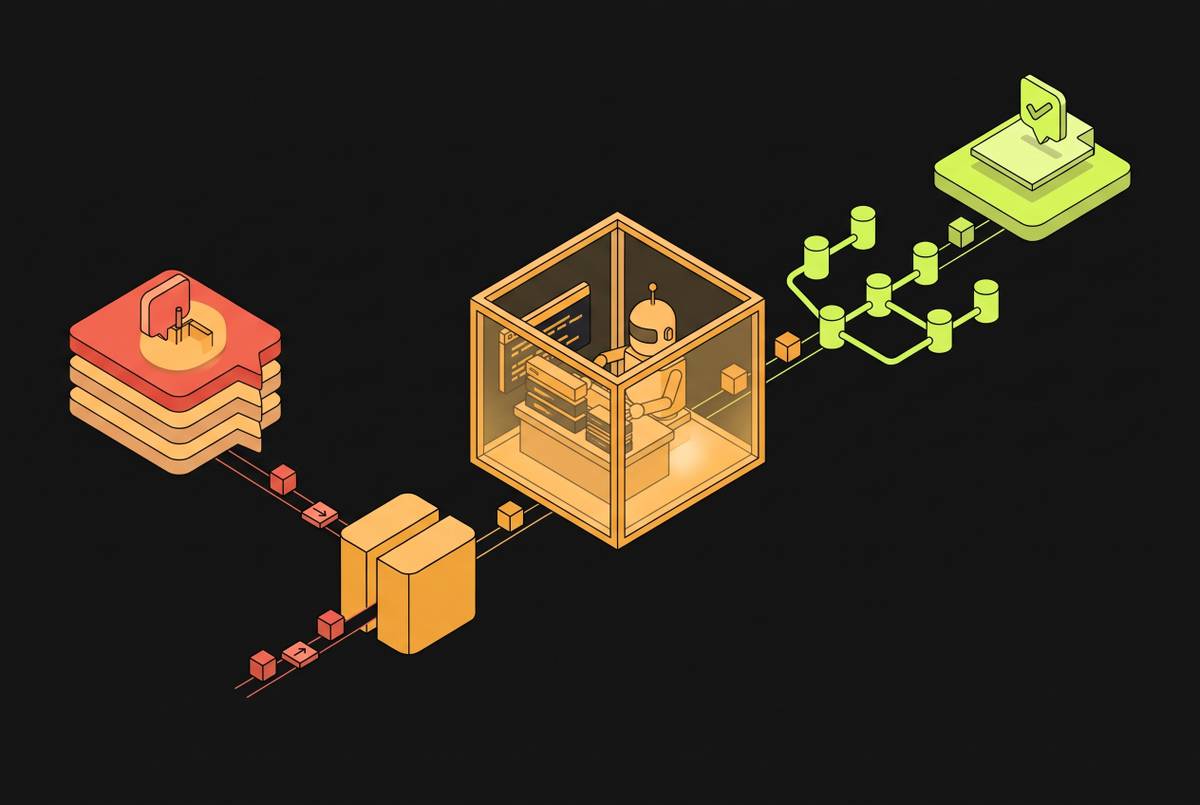
Triggered execution is the first test of delegation. A session must start from an existing event, such as a GitHub mention, Linear assignment, Slack thread, schedule, or webhook. If someone must type a command for every task, a person still has to start the work. The runner may remove dependence on a laptop staying awake, but it has not removed dependence on its operator.
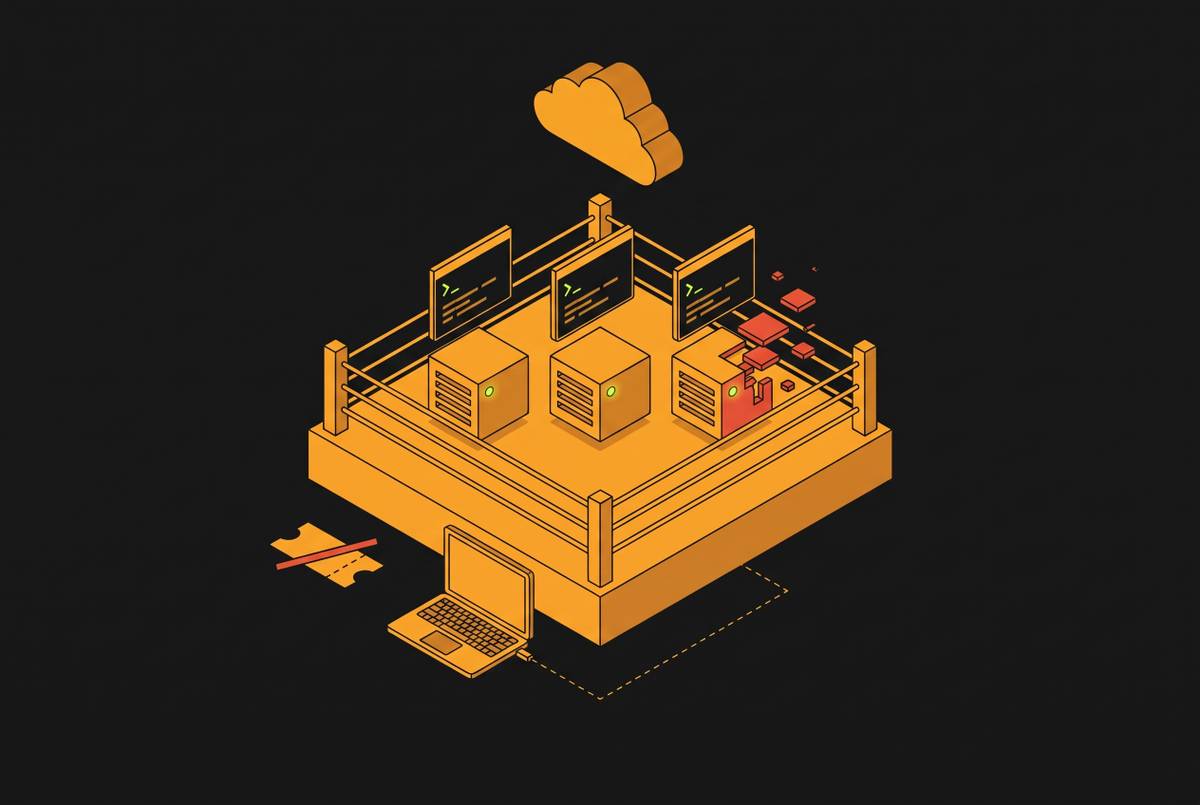
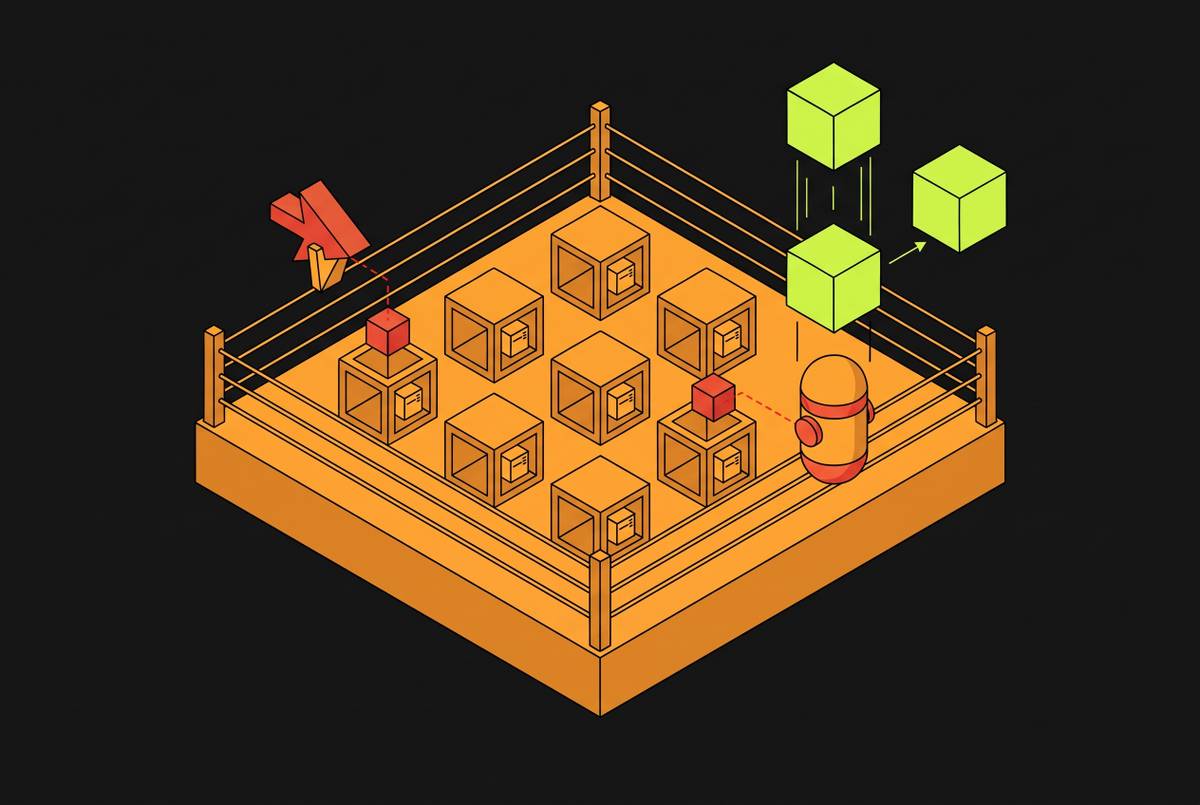
Isolation is the second test, and it extends beyond files. Each session needs its own VM or container, repository checkout, ports, databases, and task-scoped secrets. Parallel laptop sessions can otherwise compete for ports, databases, and memory, while separate worktrees are needed to prevent edits to the same files.
Test validation asks whether the agent checks its work. The session must run the test suite, or start and exercise the app, in the environment where it makes the change. Reviewable output then asks whether the result becomes a pull request that a person can merge, comment on, or return. A transcript or unapplied diff leaves reconstruction to the developer, and satisfying only three requirements leaves a human responsible for the missing fourth.
What Claude Code's first-party cloud option provides and where it stops
Claude Code’s hosted cloud sessions establish a strong execution baseline. Each gets a fresh Ubuntu 24.04 VM with the GitHub repository cloned at the current branch. Common language toolchains, Docker, PostgreSQL 16, and Redis 7 are present, while configuration provides environment variables, a network access level, and a setup script. The databases still need to be started. Having a dependency installed is not the same as having a test environment ready.
The hosted option also provides a review surface. A session ends with a diff the developer can inspect through a line-comment interface, and claude --teleport checks out the session’s branch locally when terminal work is needed. These capabilities support isolation and reviewable output, but they do not establish event-driven initiation. Starting from the web, mobile, desktop app, or claude --cloud remains a human action unless the team adds automation.
Running tests also depends on how the environment is set up. Claude can start databases and run tests, but there is no guaranteed test gate before the pull request opens. The Week 32 changelog states that auto mode became the default permission mode for new Pro, Max, and Team sessions starting August 14, 2026. That allows editing, running, committing, and pushing without per-step approval, but permission to act is not a requirement to validate.
What self-hosted environments add and what they do not change
Self-hosted environments address control over where execution happens. The public beta for Team and Enterprise customers runs on a team’s Linux or macOS server or Docker container through claude self-hosted-runner, with required flags including --environment-secret-file and --base-dir. Repository checkouts, build artifacts, secrets, and files stay inside the organization’s network. Model inference and the session event stream still cross that boundary, so this is bring-your-own compute with Claude services outside the organization’s network.
The runner’s lifecycle also affects fleet design. A long-lived process polls for queued sessions, with fixed mode maintaining a set number of runners and on-demand mode starting and stopping them through an orchestrator. A runner locks to the owner of the first session it claims, whether a user account or an agent. Fleet sizing therefore must account for concurrent owners as well as session count. Organizations with Zero Data Retention cannot use self-hosted environments, and Claude Security and Code Review sessions do not yet run in them.
Sessions can arrive through the usual interfaces or a scheduled routine, but the platform team must wire an event such as a GitHub mention to session creation. Faire’s adoption illustrates what that integration enables, including PR generation, help with CI issues, and responses to developer workflow events on compute that scales with demand. Faire had to wire those events itself because the runner did not come with that complete workflow.
How can teams run Claude Code or Codex in the cloud without managing infrastructure?
Managed cloud agent platforms combine environment preparation, event triggers, and agent configuration. This category is closest to out-of-the-box handoff because it treats the surrounding workflow as part of the product, reducing the integration work left to a platform team. The agent need not define the environment. Under the bring-your-own model account approach, teams can change agents without replacing the way work starts or returns for review.
Environment preparation is the decisive test of that promise. Setup scripting must clone a repository for editing and make the application and its dependencies usable. Native entry points can include Slack threads, Linear assignments, GitHub mentions, scheduled jobs, and webhooks, allowing the event that creates the work to initiate execution. Those integrations close the initiation gap only when they lead to a properly prepared, isolated session.
A pull request routed through GitHub or GitLab gives reviewers an artifact they can act on, while recordings and session replays provide context without requiring them to repeat the session. Platform designs differ in how completely they connect these steps. Managed hosting alone therefore does not establish that testing or review context is a first-class part of the service.
Where cross-session coordination changes what parallel handoff can do
Separate environments prevent resource collisions, while explicit messaging lets related tasks coordinate without sharing their execution state. The Week 32, 2026 changelog describes Claude Code sessions discovering one another through ListAgents and exchanging messages through SendMessage on macOS and Linux. Messages carry text Claude writes for another session and leave out conversation history and files.
That separation supports work larger than one session. A long-lived orchestrator can oversee several subagents, which can spawn their own subagents, allowing dozens of live agents without making the orchestrator’s context grow in proportion. Dynamic workflows, launched as a research preview in May 2026, use JavaScript orchestration to manage the work in a different way. Their results stay in script variables and out of Claude’s context.
For runners, the architectural requirement is broader than concurrency. To host both the orchestrator and its workers away from a developer’s machine, a managed platform needs a separate environment for each session, a way to start sessions from events, and support for cross-session messaging.
What the merge boundary means for teams evaluating "fully automated" claims
Human approval before merge is a deliberate safety boundary. Devin and Claude Code route production work toward that boundary, rather than treating an opened pull request as permission to change the main branch. GitHub Copilot requires human approval by default, though since September 2026 administrators have been able to let its own formal approvals meet merge requirements. “Fully automated” therefore needs a defined scope that specifies which approvals remain.
Execution permissions and merge governance are separate concerns. Claude Code’s “yolo mode,” invoked with --dangerously-skip-permissions, permits the agent to issue a merge call directly. Its documented setting is an isolated environment such as a container or VM. Teams evaluating runners should ask whether the platform exposes that mode and whether policy can disable it.
A PR with test results, a session recording, and an agent-validated diff presents a different decision from an untested patch. Audit logs, branch protections, and required reviewers must remain in force regardless of which runner creates it. For teams retaining human approval, the merge boundary is fixed, while the quality of the evidence arriving there is not.
What the evidence on agent-authored PRs says about review quality at volume
The evidence on agent-authored PRs supports a qualified conclusion. Agents perform reliably on small, well-scoped changes, and a meaningful share of their pull requests merge quickly without issues. However, subjective review feedback can interrupt that success because agents tend to abandon the back-and-forth, leaving it unresolved.
When agents create PRs faster than reviewers can process them, review can stop happening. The documented pattern includes changes that merged without human review, so the risk goes beyond the quality of the work.
The governance requirement follows from that capacity mismatch. Reviewers need visibility into what agents shipped, session recordings they can inspect, and a structured way to triage incoming work. Platform teams need queryable audit logs, while engineering leads need merge policies that do not require intervention on every PR. A high PR count without that review infrastructure is not evidence of successful handoff.
How to evaluate a managed runner against the four requirements before committing
A practical evaluation should begin with an existing workflow event. The buyer should ask whether a GitHub mention, Linear assignment, Slack thread, schedule, or webhook can start the session without someone opening a terminal. A service that requires a person to launch every task remains a remote execution environment, even if everything afterward happens in the cloud.
Each session should have its own checkout, credentials, ports, and databases within its VM or container. Buyers should ask specifically whether multiple sessions can run for one user and whether secrets are isolated as well as files.
The configured environment must let the agent start the app and run its test suite. The setup script is the mechanism to examine. Buyers should then ask whether GitHub or GitLab receives a PR with test results, a recording, and audit context sufficient for review without rerunning the session.
Enterprise buyers should establish whether SOC 2 controls, SCIM, audit logs, branch-protection enforcement, and self-hosting are platform capabilities or professional-services engagements. Portability means being able to switch among Claude Code, Codex, Cursor, and OpenCode without replacing the trigger model or review workflow. A managed runner that answers yes to all four handoff tests, plus these governance and portability requirements, closes the loop from workflow event to reviewable work without making the developer manage the infrastructure.